
The Ultimate Guide to Venice’s Vaporettos and Imbarcaderos 🚤⚓
Venice is a city that defies the conventional rules of geography. Here, the “pavement” is made of saltwater, the “traffic lights” are wooden poles driven into the mud, and the “buses” don’t have wheels—they have hulls. To understand Venice, you must understand the Vaporetto.
In this guide, we will break down the anatomy of the Venetian transport system, from the curious structure of the floating imbarcaderos to the complex web of lines that make up the vaporetto map. ✨
Book Online – Skip the Line & Travel the Canals
You cannot jump on board without having purchased your ticket in advance. By booking ahead, you bypass the notorious queues that frequently exceed two hours in the heat, saving valuable time for exploration.
Additionally, having your digital QR code ready is now a legal necessity on peak days to comply with the Venice Access Fee regulations, helping you avoid unexpected fines or entry delays at the city’s main checkpoints.
Key Vaporetto Hubs & Dock Locations
Click any major imbarcadero below to pin its location on Google Maps and launch direct waterbus directions on your phone.
What Exactly is an Imbarcadero?
If you search for a “bus stop” in Venice, you won’t find a bench on a sidewalk. Instead, you will find an Imbarcadero.
The Anatomy of a Floating Station
An imbarcadero is a floating pier or pontoon (pontile) moored to the canal bed by massive wooden or steel pylons. Because Venice is subject to the constant ebb and flow of the Adriatic tides—and the occasional Acqua Alta (high water)—these stations must be able to rise and fall with the water level.
The Gangway
You enter via a ramp that bridges the gap between the solid stone pavement of Venice and the floating dock.
The Waiting Area
Most imbarcaderos are enclosed in a bright white and yellow metal housing, protecting passengers from lagoon breeze and spray.
The Validation Point 📲
This is the most crucial step. Before you step onto the floating dock, pass your card over the electronic scanners. Always tap your pass here!
The “Landing” (Pontile)
Large stations (like San Zaccaria or Piazzale Roma) have multiple landings labeled A, B, C, or D. Always check the digital screens to ensure you stand at the correct line.
The Vaporetto Map: A Web of Water
Navigating the vaporetto map for the first time can feel like trying to solve a beautiful, watery puzzle. As of 2026, the ACTV network (Azienda del Consorzio Trasporti Veneziano) maintains one of the most complex aquatic transit systems in the world.
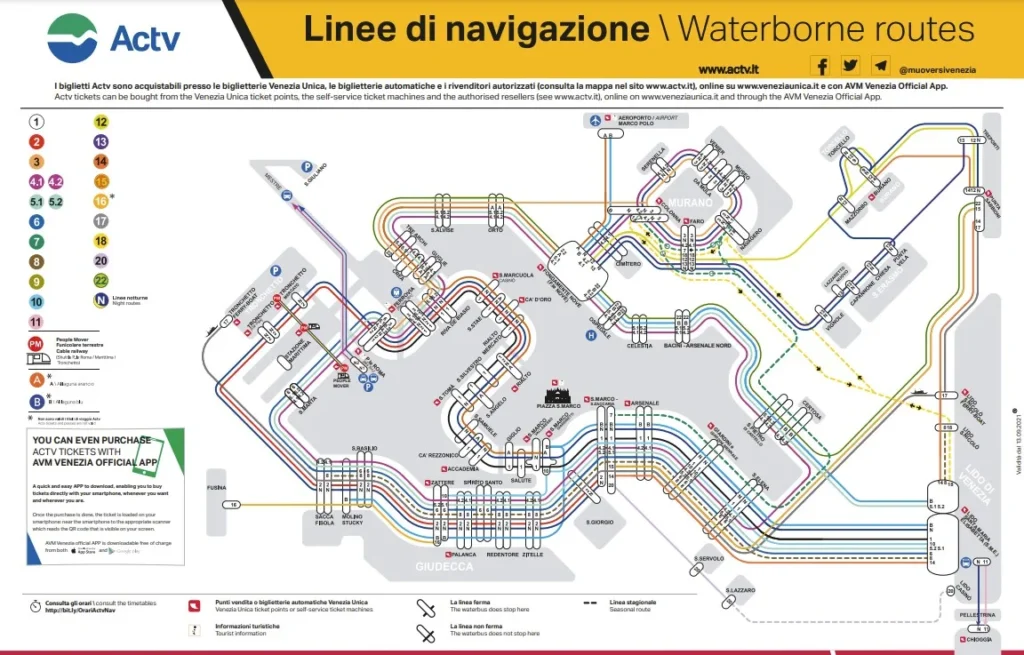
How Many Lines are There?
While the exact number can fluctuate slightly based on seasonal “Summer” and “Winter” schedules, there are generally over 20 active navigation lines in circulation.
These lines are categorized into three main types:
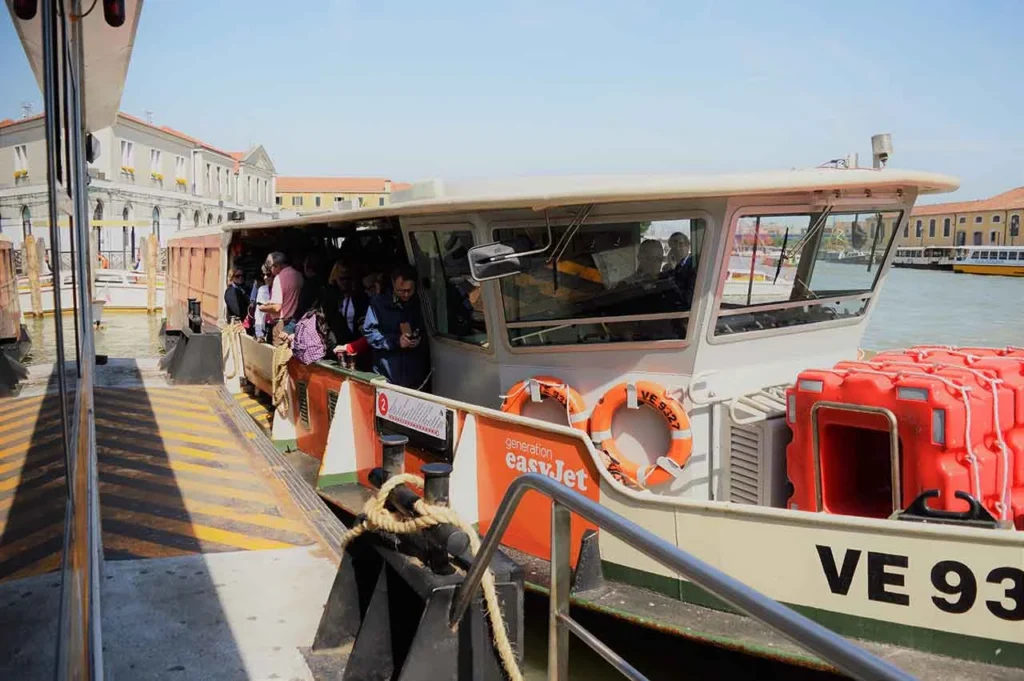
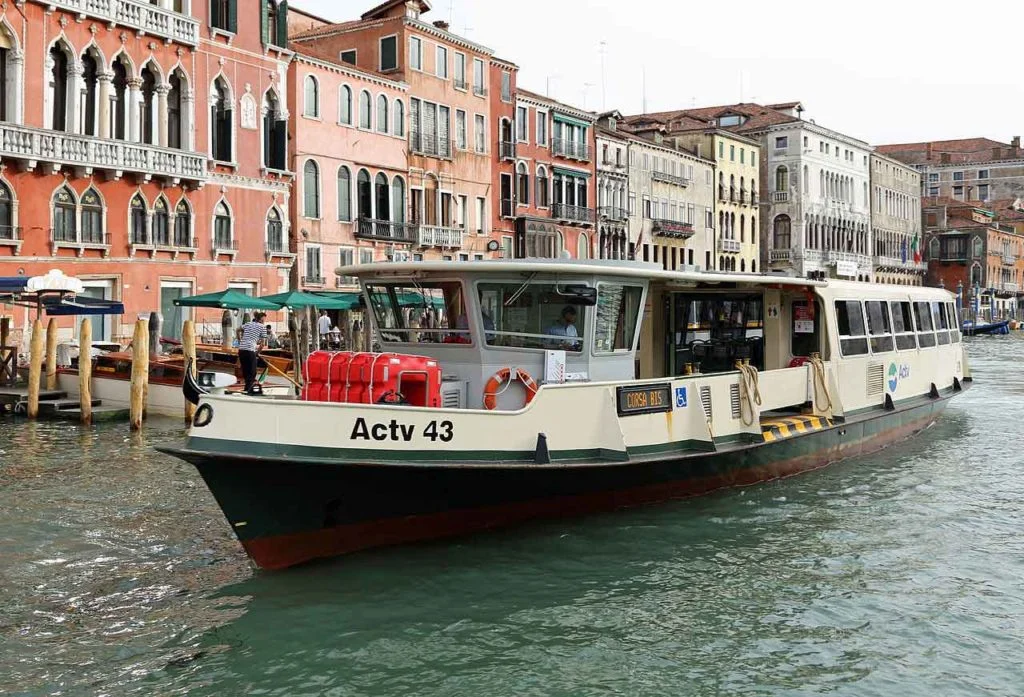
The Fleet: A City in Motion
To keep a city of nearly 50,000 residents and millions of annual tourists moving, you need a massive amount of horsepower.
The Numbers Behind the Fleet
The Most Famous Stops (Where to Get Off)
Every stop in Venice has its charm, but there are a few iconic imbarcaderos that every traveler will likely visit.
🏃♂️ Navigating the Rush Hour Rush: Etiquette for Crowded Docks
Venice’s floating docks aren’t just for tourists—they are the vital lifeline for locals going to work and school. Following basic boarding etiquette keeps trips smooth and stress-free for everyone.
Clear the Yellow Gates
Stand back from the yellow boarding gates inside the imbarcadero. Allow disembarking passengers to clear the boat completely before stepping forward.
Move Inside Immediately
Once onboard, always move toward the center or back of the deck. Lingering near the narrow entry gate blocks deckhands from closing the safety barriers and delays the boat.
Keep Gangways Open
Keep large luggage or strollers close to your body. Never place bags on passenger seats or directly in the central gangway during busy peak hours.
Prepare Bags in Advance
Remove backpacks from your shoulders when entering crowded cabins to create more standing room and prevent accidentally bumping into fellow travelers.
🌊 Acqua Alta & High Tides: What Happens to the Imbarcaderos?
Venice’s floating docks are engineering marvels designed specifically to tackle the city’s extreme tidal fluctuations (Acqua Alta). Because the pontoons rise and fall with sea levels, the docks remain accessible even when city streets flood.
Gangway Slopes
During unusually high tides, the gangway ramps bridging the stone sidewalk to the floating pier tilt at steeper angles. Extra care is recommended when pushing luggage or strollers across the ramp.
Dock Rerouting
On rare occasions when tides exceed 140 cm, low-lying piers (like San Marco Giardinetti) may be temporarily bypassed. ACTV reroutes passengers to nearby elevated docks like San Zaccaria.
🚣♀️ Vaporetto Dock vs. Traghetto Pier: Don’t Get on the Wrong Boat!
Standing along the Grand Canal, it’s easy to confuse a Vaporetto Imbarcadero with a Traghetto pier, as they often sit just a few steps apart. Here is how to spot the visual differences instantly:
Vaporetto Dock
- Visual Signs: Large, enclosed floating station painted in high-visibility white and yellow.
- Key Features: Equipped with digital arrival displays, covered waiting areas, and electronic ticket scanners.
- Vessel Type: Large ACTV motorized public water buses serving citywide routes.
Traghetto Pier
- Visual Signs: Simple wooden pier marked by a small green sign featuring a gondola icon.
- Key Features: Bare wooden dock with no electronic scanners or shelter.
- Vessel Type: Large, stripped-down gondolas rowed by two oarsmen to cross the Grand Canal.
Essential Vaporetto Etiquette & Facts
To ensure you have a smooth trip, keep these bullet points in mind:
The Secret to Saving Money
As any local will tell you, the vaporetto is the lifeblood of Venice, but it isn’t the cheapest “bus” in the world.
Let’s be real: a single 75-minute ticket is a significant investment for a short ride. For the cost of just two or three single trips, you can often secure a 24-hour or 48-hour pass. This doesn’t just save you money; it gives you the freedom to get lost.
If you see a beautiful church from the water, you can simply hop off at the next imbarcadero, explore, and hop back on the next boat ten minutes later. That is the true way to experience Venice.
Ready to Board?
Venice is a city that rewards the bold and the curious. By understanding the map, respecting the imbarcaderos, and having your pass ready, you turn a simple transport necessity into the highlight of your trip.
See you on the water! 🇮🇹🛶⚓
Why are there different letters (A, B, C) at some stops?
Large hubs like Piazzale Roma or San Zaccaria are massive. To keep traffic moving, they are split into different platforms labeled with letters. For example, Platform A might go toward the Grand Canal, while Platform B goes toward the Giudecca. Always check the digital screens at the entrance to find your letter! 🔠
How do I know which direction the boat is going?
Every imbarcadero has a map and a digital sign. Look for the “Destination” listed on the front of the boat or the electronic display. A good rule of thumb: if you are on the Grand Canal, check if the boat is heading toward Piazzale Roma (west) or San Marco (east). 🧭
Is there a physical map I can carry?
While you can find paper maps at ACTV ticket offices, the most reliable way to navigate is via the official ACTV app or the large maps posted inside every imbarcadero. The digital maps are updated in real-time for any route changes. 🗺️
Can I sit inside the Imbarcadero while waiting?
Most stations have a covered waiting area to shield you from the sun or rain, but seating is very limited. Venetians generally stand while waiting to ensure they are ready to board quickly when the boat arrives. ☔
Are the imbarcaderos accessible for wheelchairs?
Yes! Nearly all imbarcaderos are equipped with ramps. However, because they float, the steepness of the ramp changes with the tide. The vaporetto sailors are experts at assisting passengers with mobility needs—just wait near the boarding gate. ♿
What does “Limitato” mean on the vaporetto map?
If you see a line marked as “Limitato,” it means the boat does not complete the entire usual route. It might turn around early at a specific stop (like Rialto). Always listen to the onboard announcements or check the sign on the boat’s hull. 🛑
How early should I arrive at the imbarcadero?
The vaporettos are quite punctual! Unlike a train station, you don’t need to arrive 20 minutes early. Aim to be at the pier 5 minutes before the scheduled departure to allow time for ticket validation and positioning yourself for boarding. ⏱️
Can I cross from one side of the Grand Canal to the other at an imbarcadero?
No, the imbarcadero is for boarding the bus. If you just want to cross the canal without waiting for a vaporetto, look for a Traghetto sign. These are large gondolas that ferry people across for a few euros at specific points between bridges. 🛶
Is the map different at night?
Yes! After midnight, the complex daytime map disappears and is replaced by the “N” (Notturno) Line. The night map is much simpler, focusing on a circular route that connects the main parts of the city and the Lido every 20–30 minutes. 🌙