
How to Get from Venice to Murano: Guide & Tips 🚤✨
Welcome to Murano, a mesmerizing cluster of seven islands linked by bridges in the Venetian Lagoon. While often overshadowed by its famous neighbor, Venice, Murano is a world of its own—a place where ancient traditions breathe through the heat of glass furnaces and history is etched into every canal-side palazzo.
In this comprehensive guide, we will dive deep into everything Murano has to offer, from its legendary glassmaking heritage to its hidden architectural gems and the practicalities of navigating the lagoon. 🏝️
*Vaporettovenice.com is an independent travel agency and authorized reseller. We are not affiliated with ACTV or Venezia Unica.
Book Online – Skip the Line & Travel the Canals
You cannot jump on board without having purchased your ticket in advance. By booking ahead, you bypass the notorious queues that frequently exceed two hours in the heat, saving valuable time for exploration.
Additionally, having your digital QR code ready is now a legal necessity on peak days to comply with the Venice Access Fee regulations, helping you avoid unexpected fines or entry delays at the city’s main checkpoints.
📍 Where is Murano Located? Exploring the Geography of the Glass Island
Before you set foot on its shores, it is helpful to visualize exactly where Murano sits within the complex blue puzzle of the Venetian Lagoon. While many refer to it as a single “island,” the reality is much more intricate.
| Start | Line | Type | Stops |
|---|---|---|---|
| Piazzale Roma | 3 | Express | All stops |
| S. Zaccaria | 4.1 | Circular | All stops |
| S. Zaccaria | 4.2 | Circular | All stops |
| San Zaccaria | 7 | Direct | Colonna, Faro, Navagero |
| Fondamente Nove | 12 | Lagoon | Faro |
| Fondamente Nove | 13 | Lagoon | Faro |
| Fondamente Nove | N | Nighttime | Colonna, Faro, Museo |
| San Marco, Lido | Blu | Alilaguna | Colonna |
🚤 Which Vaporetto Should You Take? Choosing the Best Line to Murano
Choosing the right boat depends on your schedule, your starting point, and your tolerance for waves. While several boats head to the island, each “line” serves a very different purpose.
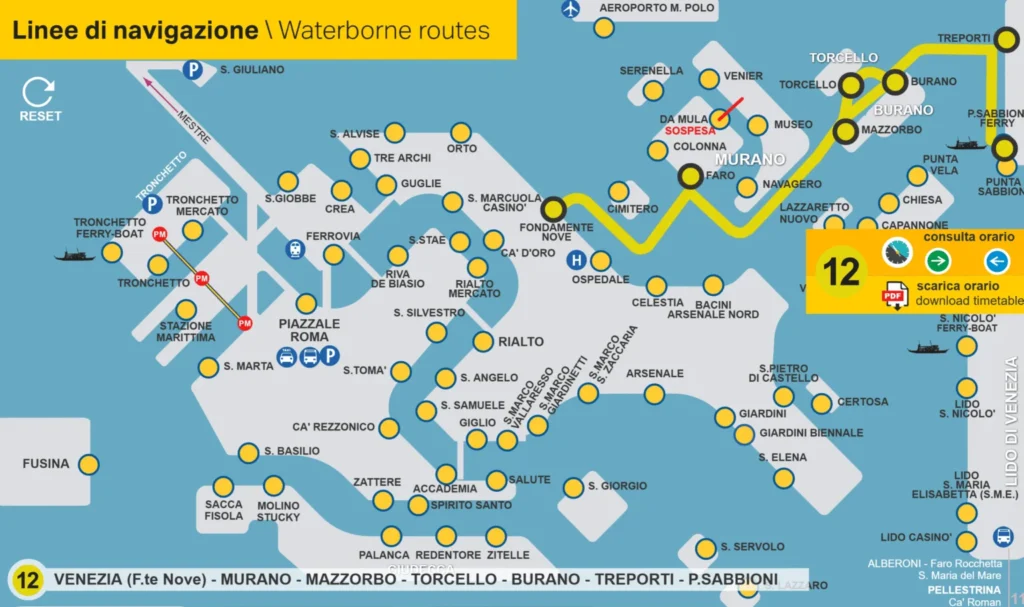
🚀 Line 12: The Island-Hopper’s Choice
If your goal is to visit multiple islands in a single day, Line 12 is the superior option.
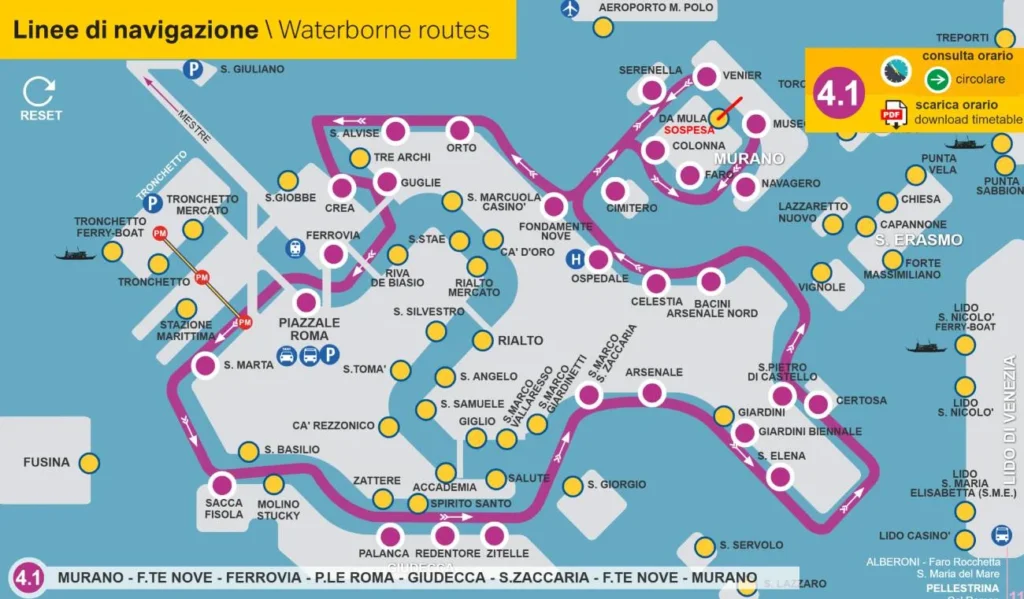
🔄 Line 4.1: The Sightseer’s Choice
If you are coming from the center of Venice (like San Marco) or want to explore the heart of Murano, Line 4.1 is usually more convenient.
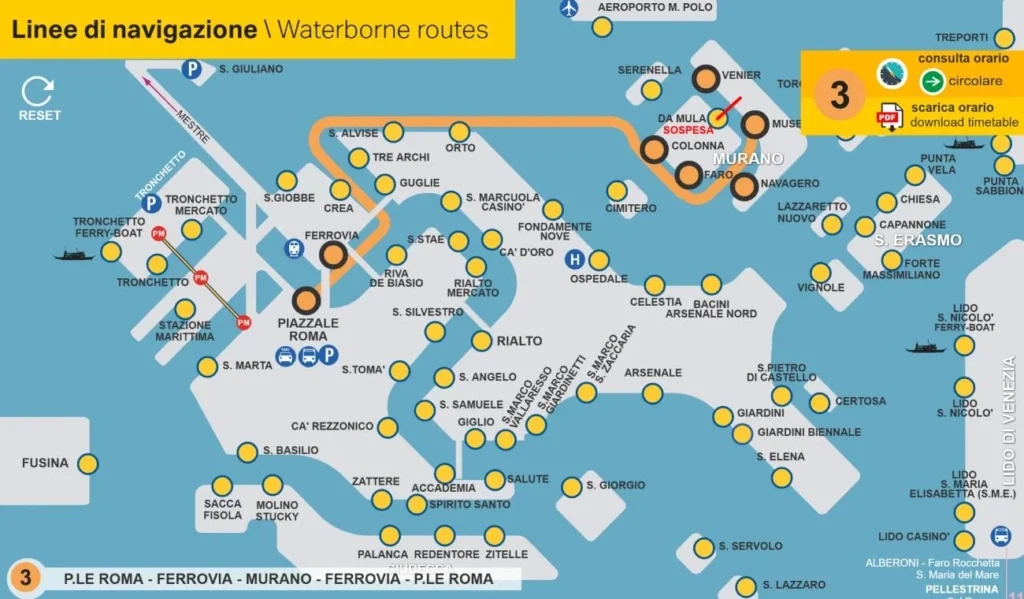
🚀 Line 3: The “Direct Express”
If you are starting at the train station (Ferrovia) or the bus terminal (Piazzale Roma), Line 3 is hands-down the best choice.
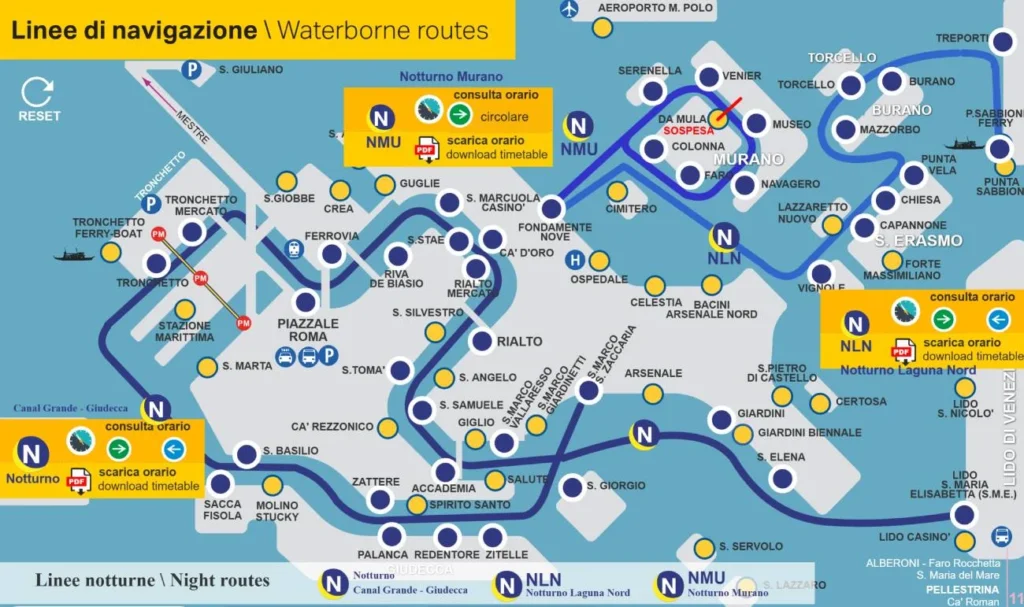
🌙 Line N: The Night Owl’s Connection
When the workshops close and the day-trippers leave, Line N (Notturno) becomes the essential link between Murano and Venice.
The Verdict
🚤 Navigating the Lagoon: How to Get to Murano
Getting to Murano is an adventure in itself. Depending on where you are in Venice, your journey across the water can be a quick hop or a scenic voyage.
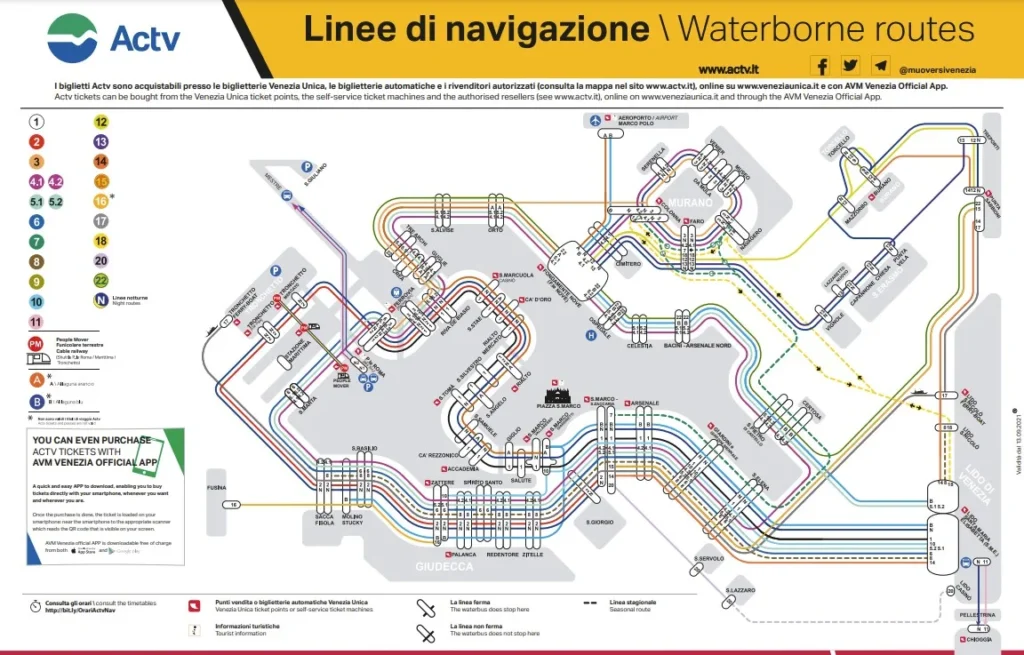
🚉 Major Departure Points & Lines
The Venetian transport system (ACTV) can be confusing, but here is your “cheat sheet” for reaching the island:
ℹ️ From Fondamente Nove (The North Gate): This is the fastest route (9–10 mins) using Lines 4.1, 4.2, 12, or 13. You’ll sail past the beautiful cemetery island of San Michele. 🏛️
ℹ️ From Santa Lucia Station & Piazzale Roma: Take Line 3 (The Express) for the fastest “TGV-style” trip, or Line 4.2 for a slower, scenic ride through the Cannaregio district. 🚂
ℹ️ From San Marco (San Zaccaria): Use Line 4.1 to circle the city or Line 7 (seasonal) for a direct “photographer’s route” with amazing views of the Doge’s Palace. 🎭
ℹ️ From the Airport (Marco Polo): Hop on the Alilaguna Blue Line for a direct water bus connection straight to the Murano Colonna pier. ✈️
⚓ Choosing Your Stop: Where to Disembark?
Murano is not just one stop; the island has seven different jetties. Choosing the right one depends on what you want to see first:
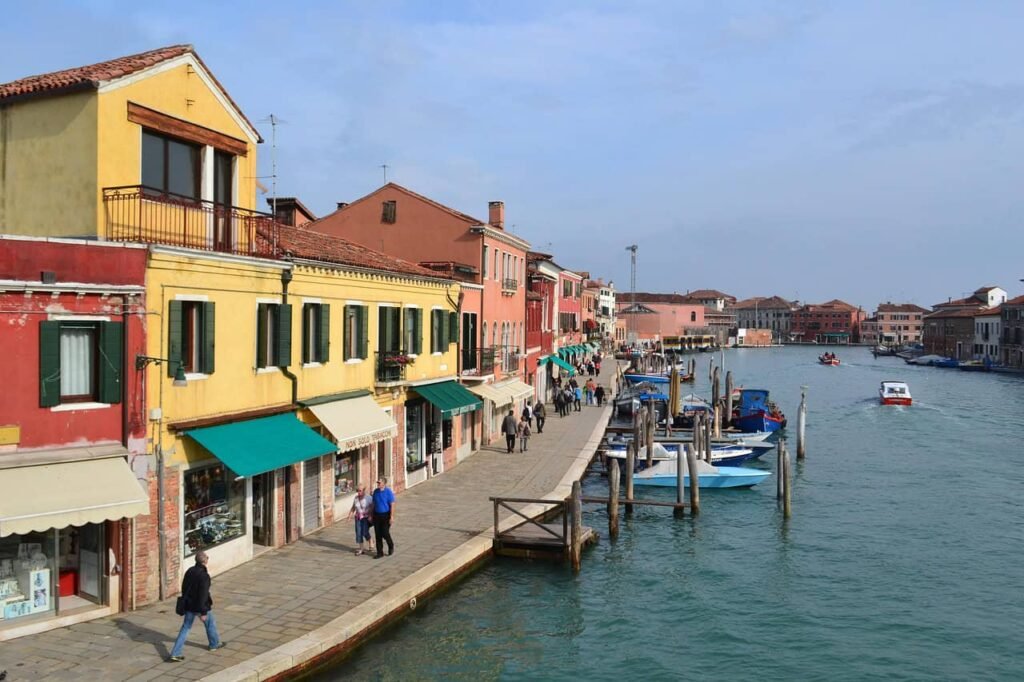
🏛️ The Birth of the Glass Island: A History Forged in Fire
To understand Murano, one must look back to the year 1291. At that time, Venice was a city built almost entirely of wood. The Doge, fearing that the roaring glass furnaces would spark a catastrophic fire in the heart of the city, ordered all glassmakers to move their operations to Murano.
However, safety wasn’t the only motive. By isolating the glassmakers on an island, the Venetian Republic could better guard the secrets of glassmaking. In the Middle Ages, Murano glass was the “Silicon Valley” of its time. The techniques for creating mirrors, crystal (cristallo), and multicolored glass were state secrets.
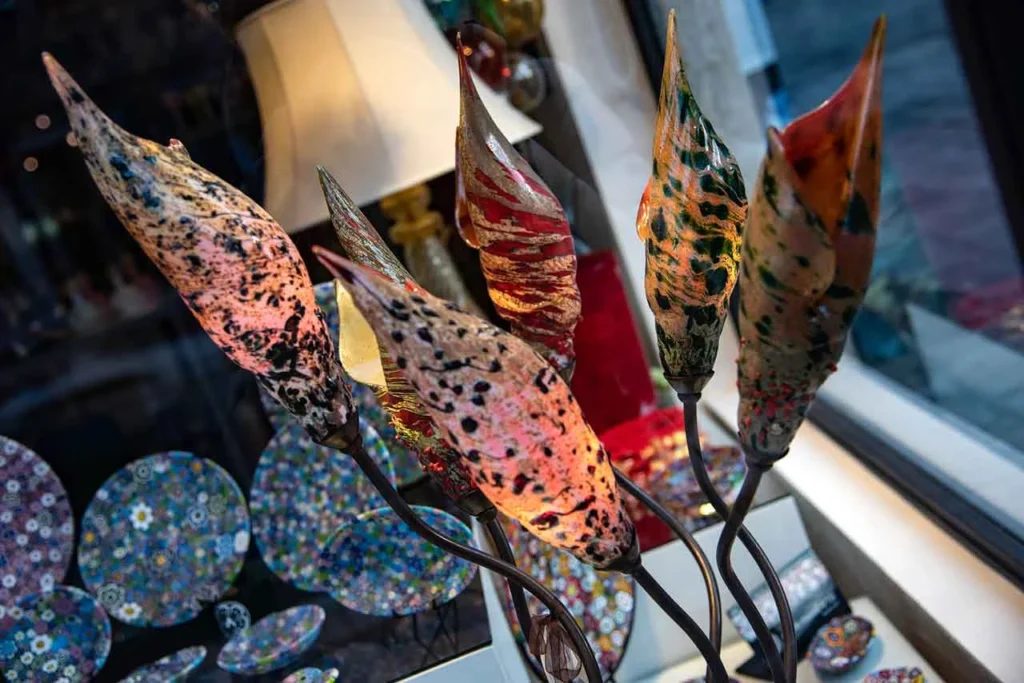
🎨 The Magic of Murano Glass: Beyond the Souvenirs
You cannot visit Murano without experiencing the “Dance of Fire.” Glassmaking here is more than an industry; it is a performance art.
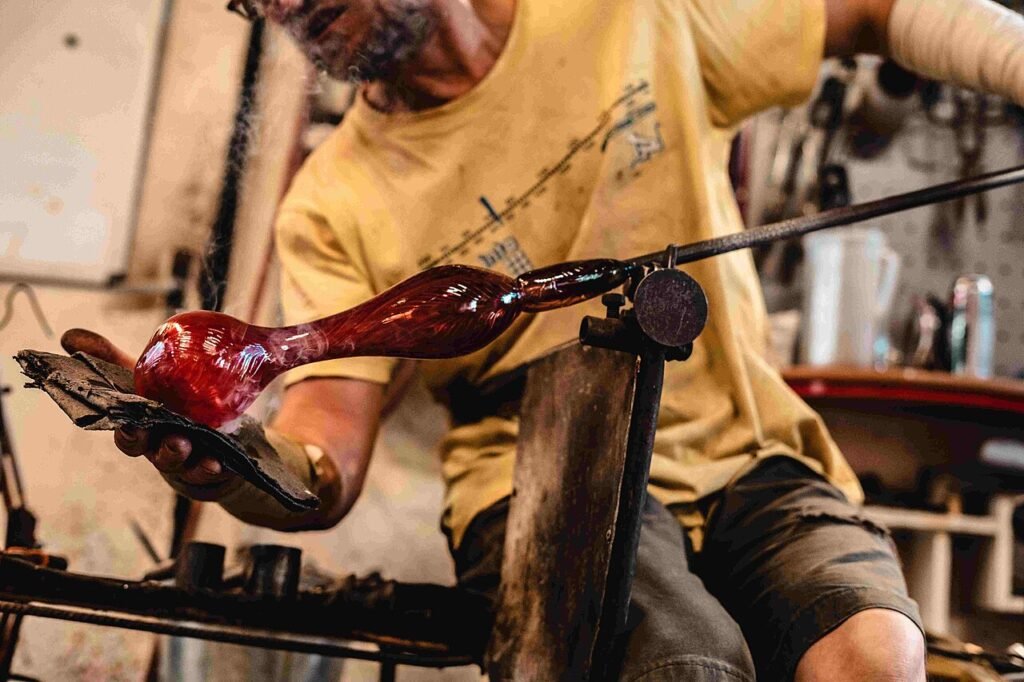
🔨 Seeing a Glassblowing Demonstration
Most furnaces (fornaci) offer short demonstrations.
🏛️ The Museo del Vetro (Glass Museum)
Located in the stunning Palazzo Giustinian, this museum traces the history of glass from Roman times to the present day.
🛒 Shopping: How to Spot Authentic Murano Glass
With many cheap imitations flooding the market, here is how to ensure you are buying the real deal:
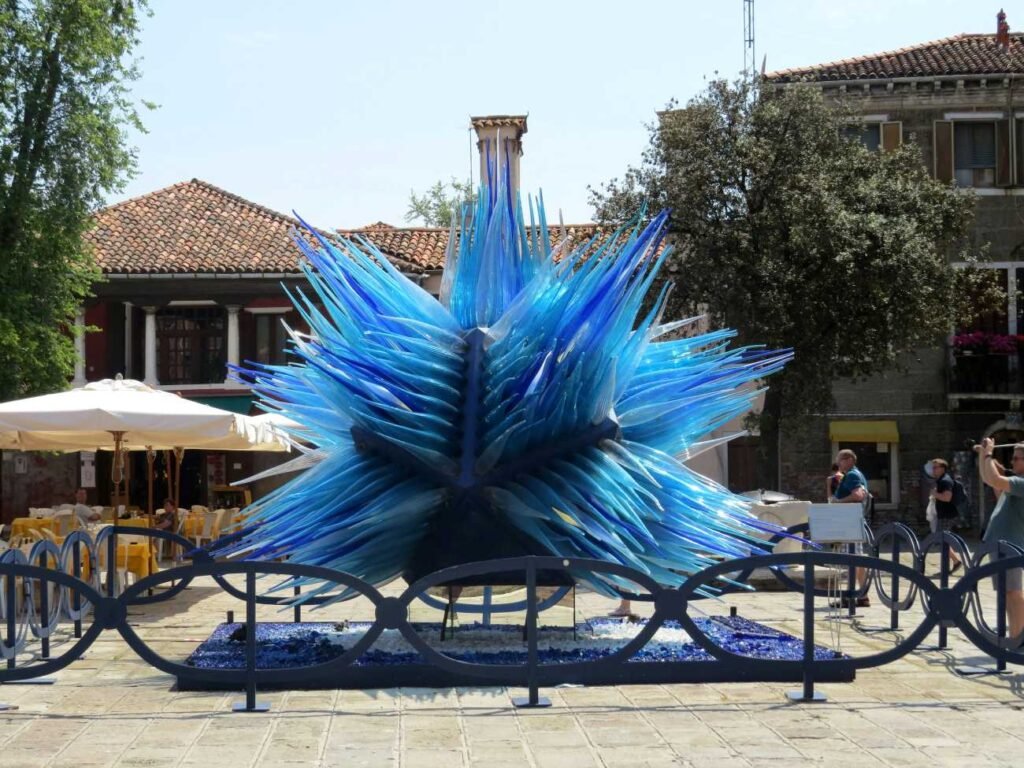
⛪ Architectural Gems: The Silent Beauty of Murano
Beyond the glass, Murano holds some of the most significant religious architecture in the lagoon.
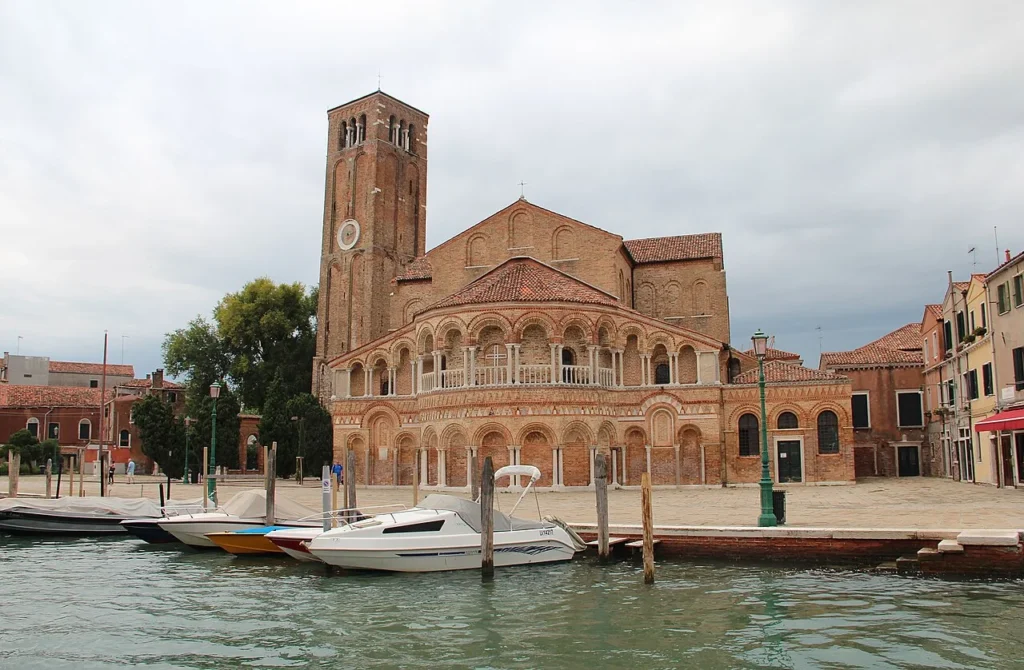
🐲 Basilica di Santa Maria e San Donato
This is one of the oldest churches in the lagoon (founded in the 7th century) and is a masterpiece of Veneto-Byzantine style.
⛪ Church of San Pietro Martire
This church houses some of Murano’s greatest paintings, including works by Giovanni Bellini and Paolo Veronese. It is a quiet, contemplative space filled with high-Renaissance art that would be mobbed by tourists if it were in central Venice.
🍕 Dining in Murano: A Lagoon Feast
Murano is the perfect place for a “slow food” lunch. While Venice can feel rushed, the pace here is more relaxed and authentic.
💡 Expert Tips for a Perfect Day Trip
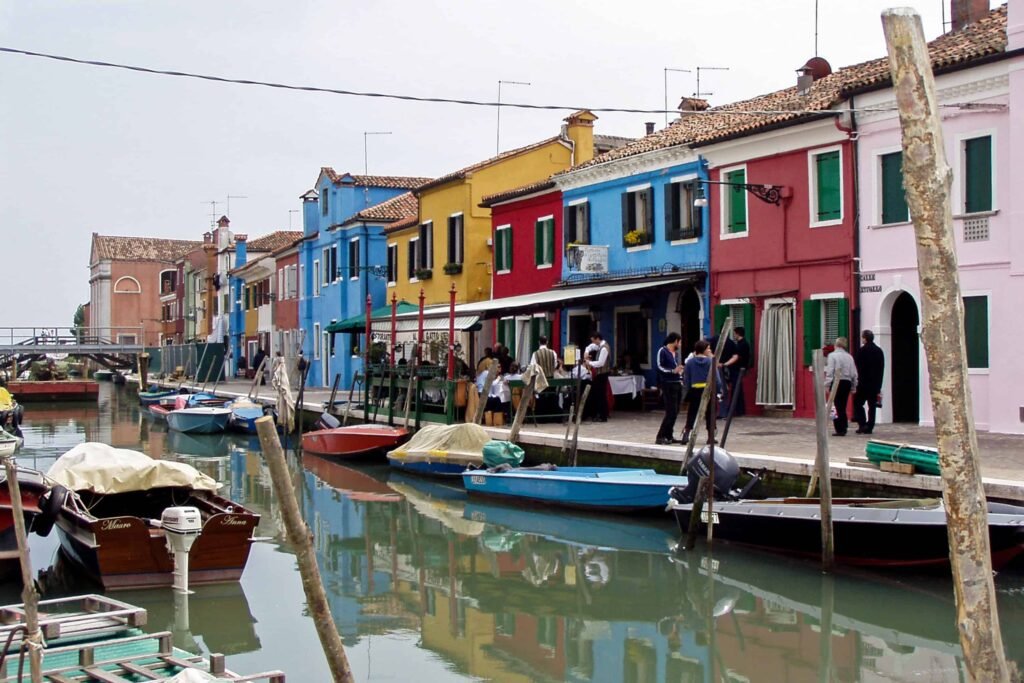
While most travelers never leave the heart of Venice, a quick trip to Murano reveals a world of quiet canals, authentic artisan workshops, and a history much deeper than its famous glass. 🚤
✨ Conclusion: The Island of Light
Murano is a place of contradictions—where the delicate fragility of glass meets the industrial roar of the furnace, and where ancient Byzantine mosaics sit next to modern art galleries. Whether you are there to buy a masterpiece, learn about the alchemical secrets of the Doges, or simply wander the quiet canals with a gelato in hand, Murano will leave a lasting glow in your memory.
Pack your camera, hop on the Vaporetto, and let the colors of the lagoon guide you! 🇮🇹🛶🛥️
| Vaporetto | Price | Tickets |
|---|---|---|
| 75-Minute | 12.00 € | Book Online |
| 24-Hour | 23.50 € | Book Online |
| 48-Hour | 40.00 € | Book Online |
| 72-Hour | 50.00 € | Book Online |
| 7-Day | 70.00 € | Book Online |
| + Murano + Burano | 37.00 € | Book Online |
| + Shuttle | 24.00 € | Book Online |
| + Water Taxi | 51.00 € | Book Online |
| + Ca’ Pesaro | 27.00 € | Book Online |
Where do the boats depart from in Venice? 📍
There are three main hubs for Murano-bound vaporettos:
How much does a ticket cost? 💶
Navigating the costs of Venetian water transport is straightforward once you choose between a single-use fare and a timed travel pass. For a quick out-and-back trip, a Standard 75-Minute Ticket covers your journey and any transfers within that window. However, if you plan to visit multiple islands like Burano or Torcello, a Daily or Multi-Day Pass is almost always the more economical choice, as it typically pays for itself in just three trips.
Which stop should I get off at in Murano? 🛑
Murano has 7 stops, but these 3 are the most important:
Do I need to book my vaporetto ticket in advance? 🎟️
While you don’t need to reserve a specific time slot for the vaporetto, waiting to buy tickets at the docks can lead to long queues, especially during the busy season. To save time and skip the crowds at the ticket booths, it is highly recommended to buy your pass online on this page before you start your journey.📲🚤
Can I go directly from Murano to Burano? 🌈
Yes! You do not have to go back to Venice. Simply head to the Murano Faro stop and catch Line 12. The journey takes about 30 minutes and offers a beautiful view of the northern lagoon.
How late do the vaporettos run back to Venice? 🌙
Standard lines (like 4.1 and 4.2) run until approximately 11:00 PM. After that, the Night Line (Ligne N) takes over, running once an hour between Fondamente Nove and Murano throughout the night.
Is the vaporetto accessible for strollers and wheelchairs? ♿
Yes. The larger vaporettos (like Line 12 and Line 3) are fully accessible. The crew will usually put out a ramp for wheelchairs. Strollers are allowed but may need to be folded if the boat is extremely crowded.
What happens if I forget to validate my ticket? ⚠️
Venetian transit police are very strict on the Murano routes. Even if you have a valid ticket, you must tap it against the electronic scanner on the dock before boarding. If caught with an unvalidated ticket, you could face a fine of over €50 plus the ticket price.
Can I bring luggage on the boat? 🧳
Yes, but there are limits. One large piece of luggage and one hand-carry item per person are included in the ticket price. If you are moving between hotels with several large suitcases, the conductor may ask you to pay for an extra “luggage ticket.”