
Ponte di Rialto: Venice’s Busiest Vaporetto Stop
Few vaporetto stops carry as much daily traffic as Rialto, and for good reason: this is the beating heart of the Grand Canal, sitting right beneath the iconic bridge that gives the imbarcadero its name.
Whichever line brings you here, be prepared for a stop that is genuinely one of the busiest on the whole network—a little patience goes a long way, especially during peak midday hours! 🌉🚤
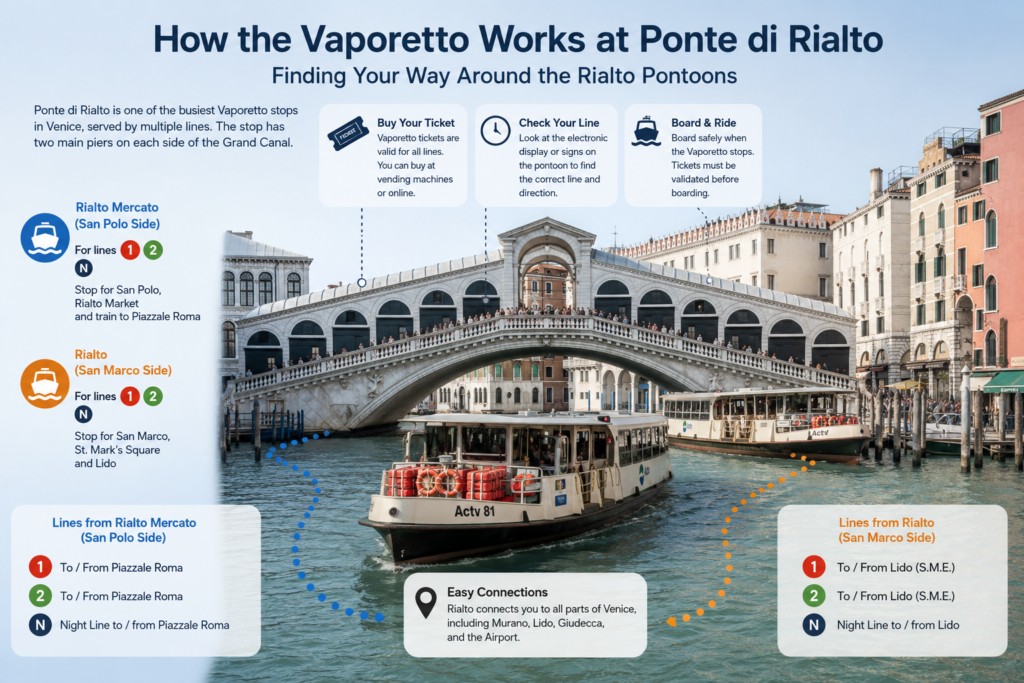
Vaporetto Lines Serving Ponte di Rialto
Two of the network’s main routes serve this stop directly.
Line 1 – The slow, scenic option, gliding the full length of the Grand Canal and stopping at nearly every palazzo along the way. The natural choice if you want to soak in the views on your way in or out.
Line 1 Interactive Route
Piazzale Roma
Stop #1 of 21Main bus and car terminal connecting Venice to mainland Mestre, airport shuttles, and parking garages.
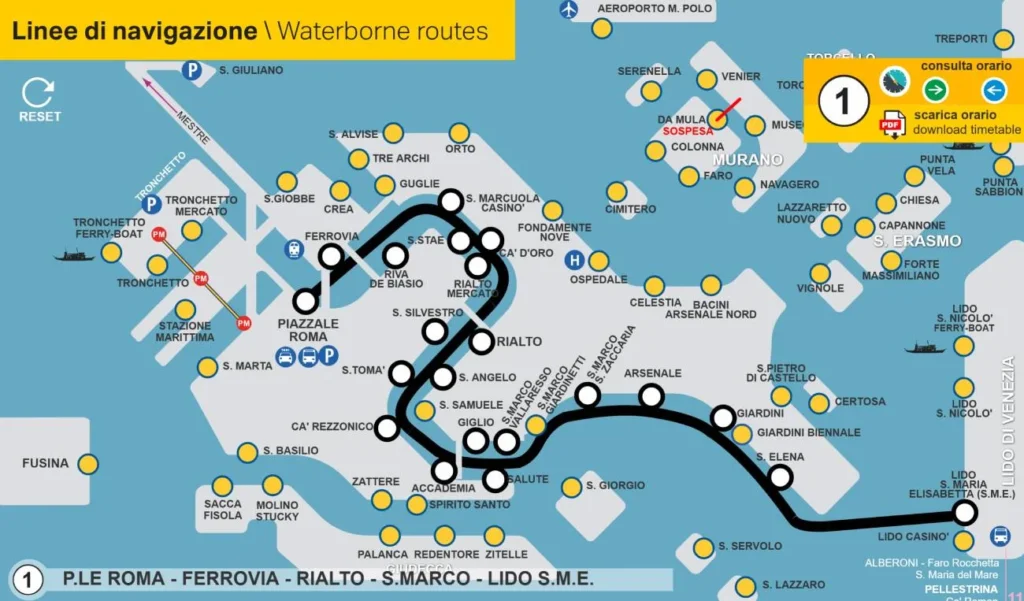
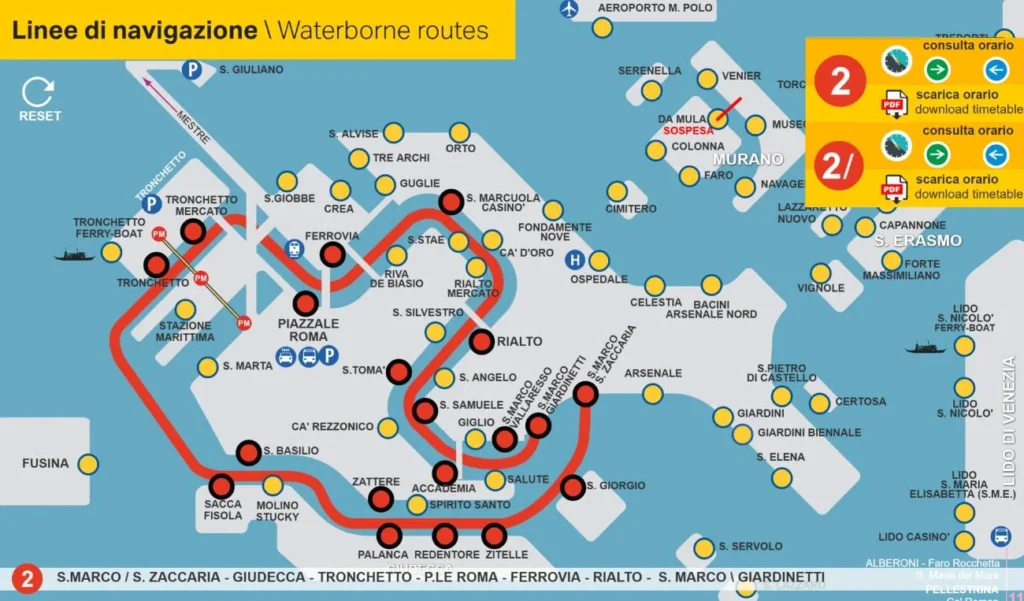
Line 2 – Covers similar ground but skips many of the intermediate stops, making it the faster “express” route between Piazzale Roma or the train station and San Marco.
Line 2 Express & Loop Route
San Marco Giardinetti
Stop #1 of 15Key terminal station right at St. Mark’s Gardens. Fast access to St. Mark’s Basilica, Doge’s Palace, and lagoon cruises.
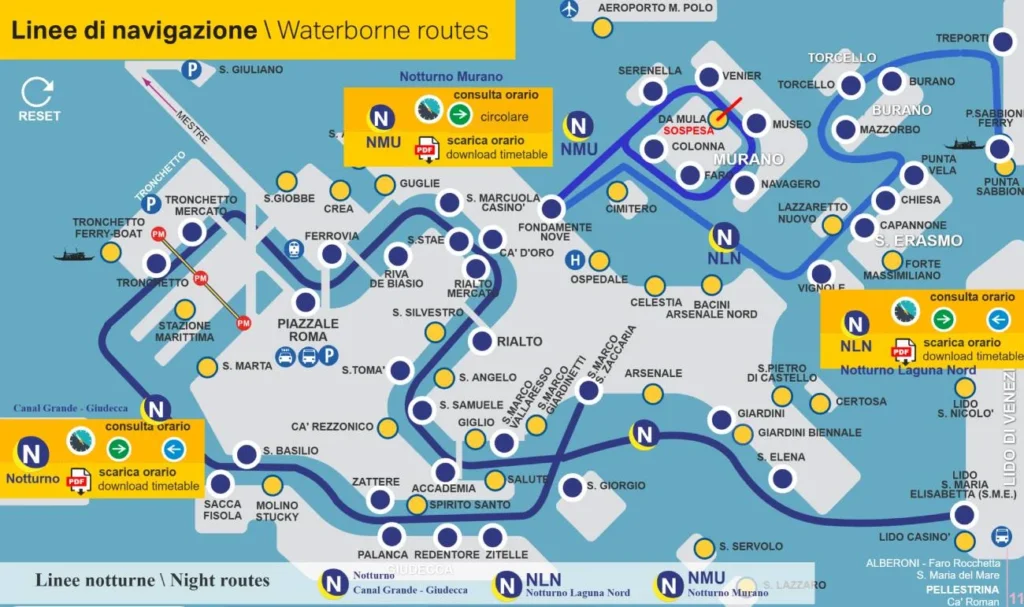
Night Line N – After midnight, when the daytime lines wind down, the night service takes over, running roughly every twenty to thirty minutes so that getting back to your accommodation late in the evening is never a problem.
Line N Night Route (Notturno)
San Marco San Zaccaria
Stop #1 of 24Primary late-night central hub connecting St. Mark’s Square to the Giudecca loop, Grand Canal, and Lido beach island.
Rialto Vaporetto Timetable
Getting the timing right at Rialto is easier once you know roughly how often each line runs.
During the day, both Line 1 and Line 2 pass through frequently enough that you rarely need to plan around a fixed departure time, but service does slow down in the evening and change again overnight once the Night Line takes over.
The table below gives a general overview of operating hours and frequency for each line serving this stop; exact departure times can vary slightly by season, so it’s always worth double-checking the digital display at the pontoon or the ACTV app on the day.
| Line | Hours | Frequency |
|---|---|---|
| Line 1 | 5:00 am – Midnight | ⏱️ Every 10 – 12 min |
| Line 2 |
7:00 am – 11:00 pm |
⏱️ Every 10 – 15 min |
| 🌙 Night Line (N) | 11:30 pm – 5:00 am | ⏱️ Every 30 – 60 min |
Frequencies apply to the high season (April – October) and may be reduced in winter months. Always confirm live departure times at the stop before boarding.
What to See at the Ponte di Rialto
Stepping off the vaporetto here puts you right in the middle of one of the richest concentrations of things to see in the whole city. A few highlights worth building time into your visit for:
Finding Your Way Around the Rialto Pontoons
Unlike smaller stops with a single platform, Rialto is split across several separate pontoons, generally labelled A, B, C, and D. This can catch first-time visitors off guard, because boats heading in opposite directions, or serving different lines, don’t always leave from the same dock.
The pontoons closer to the Fondaco dei Tedeschi building tend to serve one line, while those set slightly further along toward the market serve the other.
The safest approach is always to check the digital display or the posted timetable at the pontoon itself before boarding, since the destination board will confirm whether the boat is heading toward San Marco or toward the station.
During periods of acqua alta, or exceptionally high tide, Rialto is also among the first stops in the city to have raised walkways installed, so that boarding and disembarking stay dry even when the surrounding pavement floods.
Accessibility at the Rialto Stop
For travellers with reduced mobility, it’s worth understanding the distinction between the vaporetto stop itself and the bridge above it. The floating pontoons at Rialto are built to the same accessible standard as the rest of the ACTV network: they sit at a consistent, gently sloped level with the boats, and crew members are generally available to assist with boarding when needed. Reaching the imbarcadero from the surrounding streets is also relatively manageable, since the fondamenta along the canal is flat and unobstructed in most places.

The Ponte di Rialto itself, however, presents a different picture. As a centuries-old stone structure, the bridge rises via a series of stepped inclines on both approaches, and no ramp or lift has been installed to accommodate wheelchairs or other mobility aids. In practice, this means that travellers who cannot manage stairs should not plan to cross from the San Marco side to the San Polo side on foot at this point. The most practical alternative is to remain on the water: boarding the vaporetto one stop further along the Grand Canal allows you to reach the opposite bank without needing to negotiate the bridge’s steps at all.
It’s a detail worth planning around in advance, particularly for anyone travelling with a wheelchair, a stroller that can’t easily be lifted, or simply limited stamina for stairs.
Photography at Rialto: Capturing Venice’s Most Iconic View
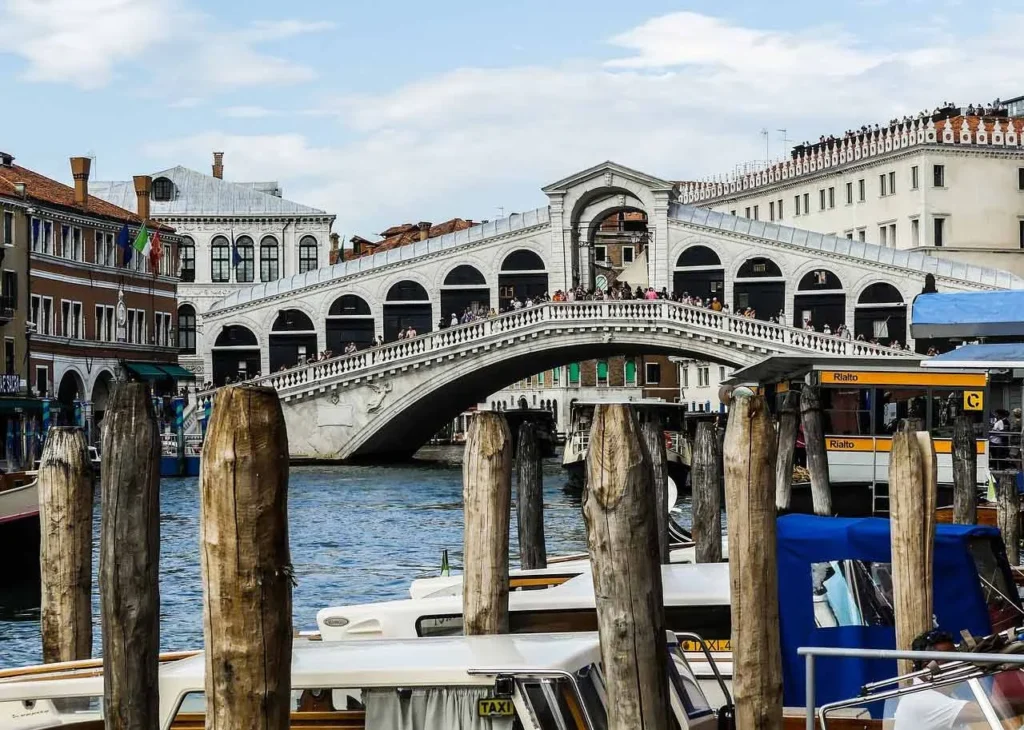
If there’s one imbarcadero in the entire city built for photography, it’s this one. The approach by boat along the Grand Canal toward Rialto is arguably the single most photogenic sequence the vaporetto network has to offer, and the Line 1 in particular rewards patient passengers who position themselves near the open sides of the vessel. As the boat rounds the bend before the stop, the bridge comes into view framed by centuries-old palazzi on either bank, their weathered facades reflecting in the water. Early morning departures, ideally before the canal traffic picks up and before the crowds gather on the bridge itself, offer the clearest light and the calmest water for reflections.
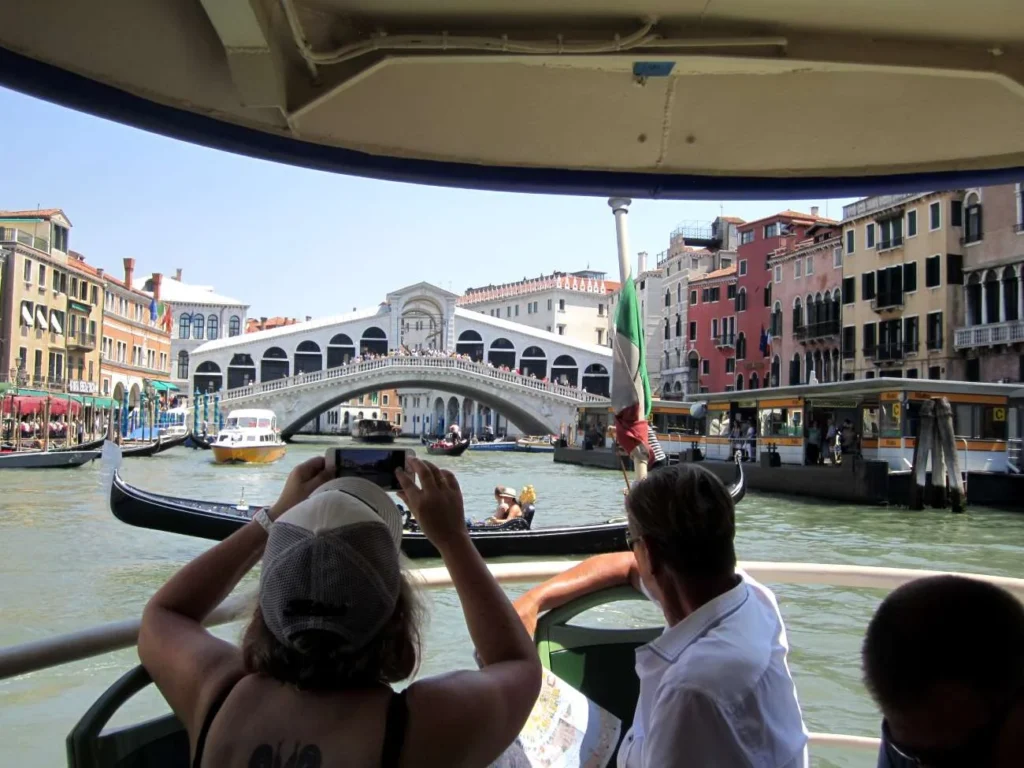
Once ashore, the pontoon area itself provides an unusually good vantage point looking back toward the bridge, especially from the side nearer the market, where the curve of the canal opens up a wide, uncluttered sightline. For those willing to walk a short distance, climbing partway up the bridge and shooting from one of the side staircases, away from the crowded central passage, produces some of the most recognisable images of Venice: gondolas crossing beneath stone arches with the Grand Canal stretching away in both directions.
Best spots and timing at a glance:
Photographers chasing golden hour light generally find the late afternoon particularly rewarding, when the sun angles low across the water and catches the warm tones of the Istrian stone.
Buying Your Vaporetto Ticket for Rialto
Getting to and from Rialto by water requires a valid ACTV travel document, and there are a few formats worth understanding before you arrive. For visitors only passing through the area briefly, perhaps hopping on for one or two stops along the Grand Canal, the 75-minute ticket is designed exactly for that kind of short, single-purpose trip, allowing unlimited transfers within its validity window.
If Rialto is just one stop among many on a fuller day of exploring, whether that means combining the market, the bridge, San Marco, and perhaps a trip out toward Murano, the 24-hour ticket tends to work out as the more practical and cost-effective option, since it removes the need to validate a new ticket every time you board.
| Vaporetto | Price | Tickets |
|---|---|---|
| 75-Minute | 12.00 € | Book Online |
| 24-Hour | 23.50 € | Book Online |
| 48-Hour | 40.00 € | Book Online |
| 72-Hour | 50.00 € | Book Online |
| 7-Day | 70.00 € | Book Online |
| + Murano + Burano | 37.00 € | Book Online |
| + Shuttle | 24.00 € | Book Online |
| + Water Taxi | 51.00 € | Book Online |
| + Ca’ Pesaro | 27.00 € | Book Online |
Practical Tips for the Rialto Stop
A few small things can make navigating this busy stop much smoother:
The Traghetto at Rialto
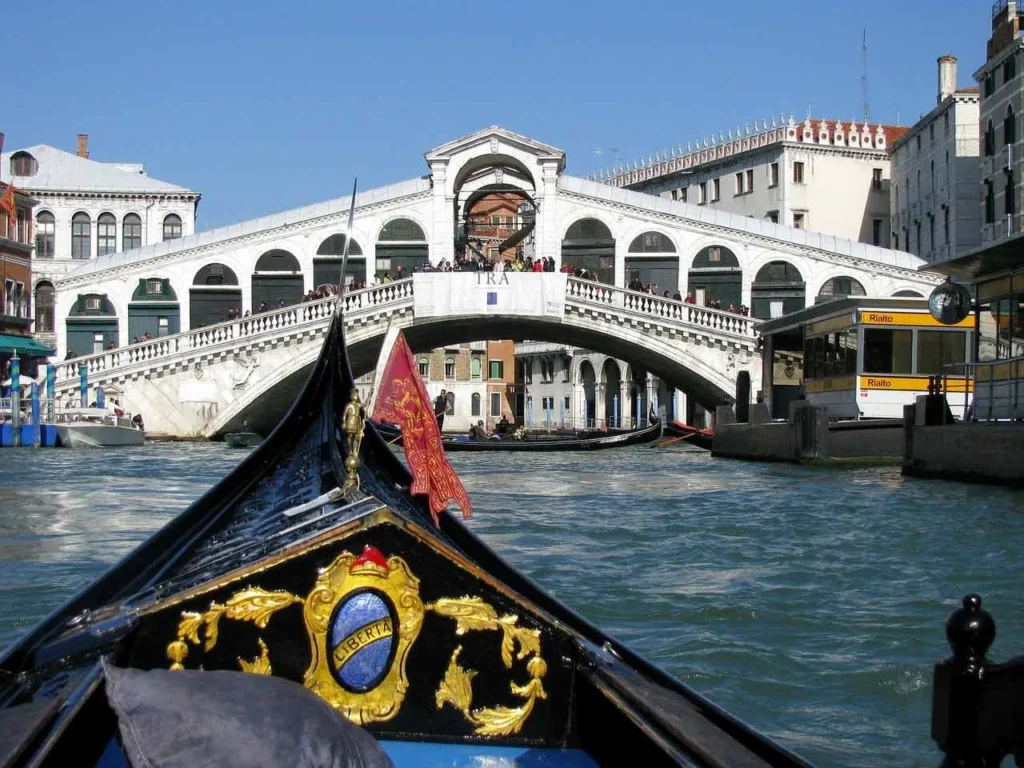
Alongside the vaporetto, Rialto is also one of the few spots in Venice where you can still cross the Grand Canal by traghetto, a large, gondola-style rowing boat used purely for short ferry crossings. It’s a quick, cheap way to hop between the San Marco and San Polo banks without walking over the bridge itself.
The Cicchetti Culture Around Rialto
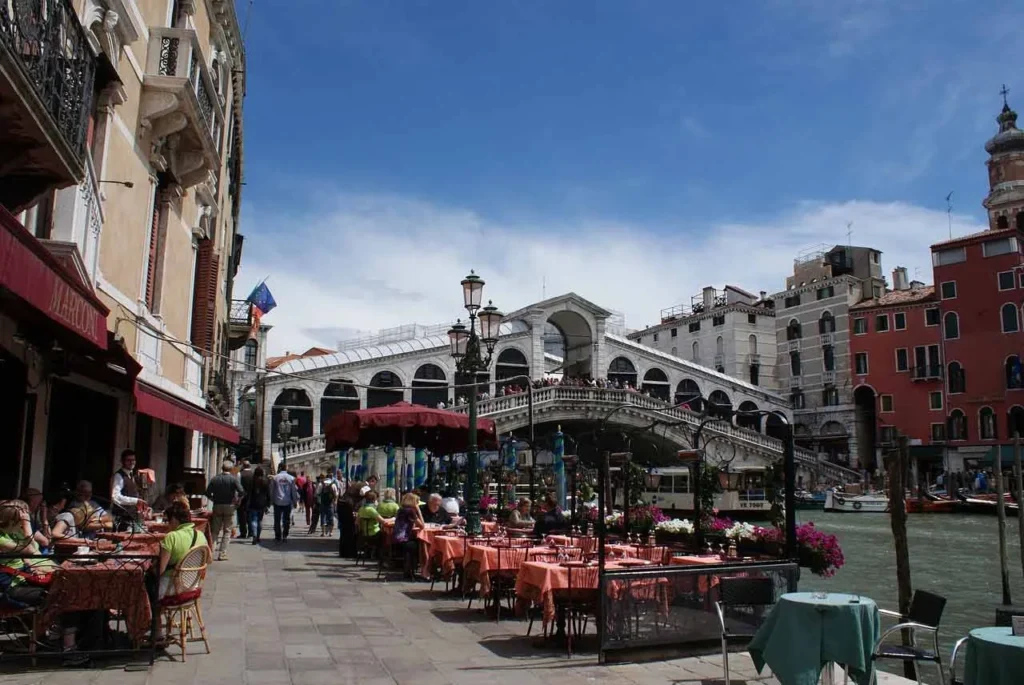
Eating well right on the bridge can be tricky: canal-side restaurants tend to be pricier and less memorable than what’s tucked away just behind the market. A few pointers for a more authentic bite:
A Brief History of the Ponte di Rialto
The name Rialto itself comes from Rivoalto, meaning “high bank,” a reference to one of the few patches of ground in the early Venetian lagoon that stood reliably above the tideline. It was this practical advantage that drew the city’s political and commercial life to the area as early as the ninth century, and the settlement grew into the beating commercial core of the Republic.
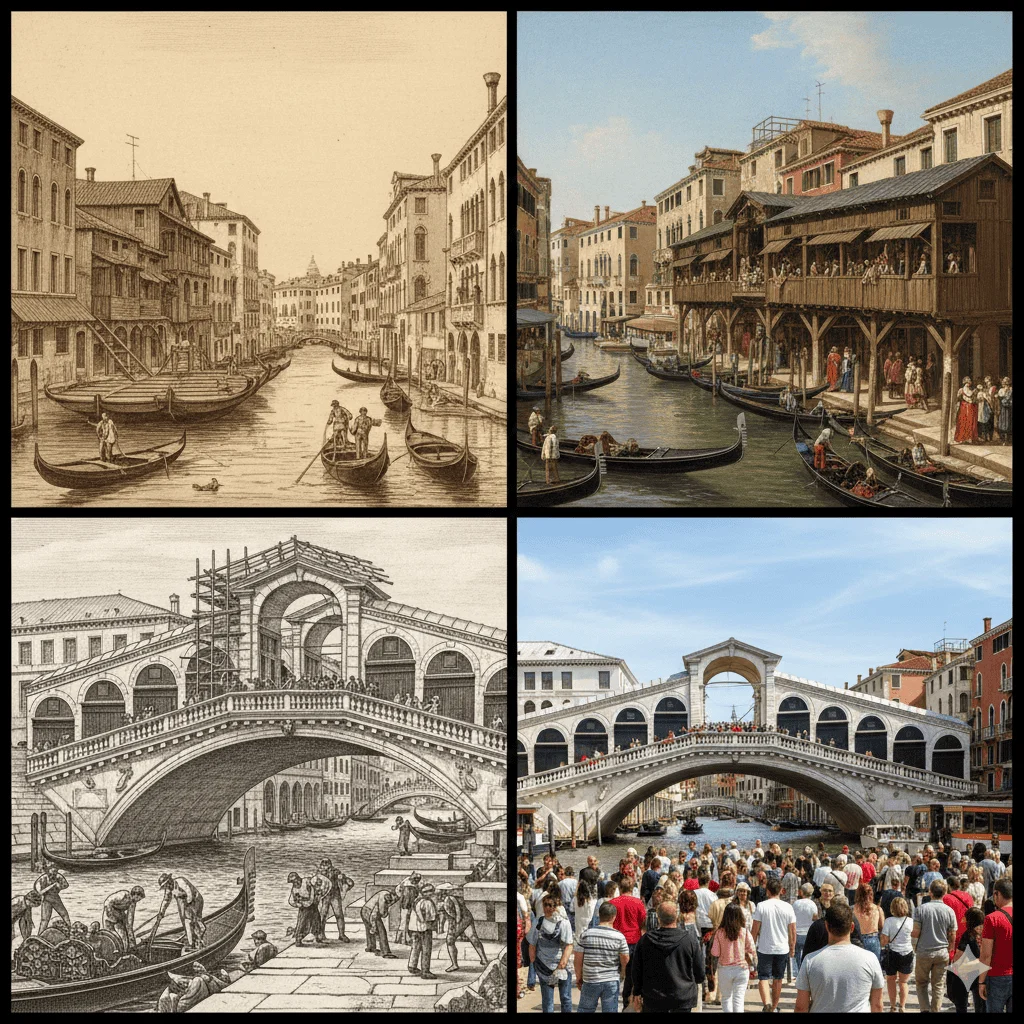
Crossing the Grand Canal at this exact point, however, took the city centuries to get right. The earliest crossing, built in the twelfth century, was a simple structure resting on wooden piles. A more substantial wooden bridge followed in the thirteenth century, complete with a drawbridge-style central section that could be raised to let tall merchant ships pass beneath. That wooden structure met a dramatic end in 1444, when a crowd gathered on the bridge to watch a wedding procession pass below caused the timber to give way, sending hundreds of spectators into the canal.
Following the collapse, the Republic eventually committed to something more permanent: a bridge built entirely of stone. Some of the era’s most celebrated architects, including Michelangelo and Palladio, submitted ambitious designs for the project, but it was ultimately Antonio da Ponte whose proposal won out, with its bold single stone arch spanning the canal without the need for a central support. Completed at the end of the sixteenth century, that design has endured largely unchanged ever since, making the Ponte di Rialto one of the oldest continuously used bridges in the city and, to this day, the beating architectural centrepiece of any trip along the Grand Canal.
The Rialto Bridge at Night
Once the market stalls are packed away and the day-trippers head back to the mainland, Rialto takes on a completely different character. It’s well worth setting aside an evening to see it after dark.

A Word of Caution for Travellers with Dogs
Venice is a wonderfully walkable city for dog owners overall, and the vaporetto network does allow well-behaved dogs on board under certain conditions. Rialto, however, is not the easiest stop to manage with a dog in tow. The sheer density of foot traffic on the pontoons, the narrow gaps between boats and the dock during busy periods, and the general crush of people crossing the bridge above all make this one of the more stressful imbarcaderi to navigate with a pet.
Travellers planning a route with their dog may want to read the dedicated guide on travelling with dogs on the vaporetto before choosing Rialto as a boarding or disembarking point, since a quieter stop nearby is often a far more comfortable choice.
Which vaporetto line offers the best views on the way to Rialto?
Line 1 is generally considered the most scenic, since it travels the full length of the Grand Canal and passes directly under the bridge just before docking.
How do I get from the Rialto stop to Piazza San Marco?
Simply stay on Line 1 or Line 2 heading in the San Marco direction; the journey takes roughly 10–15 minutes by water.
Does the vaporetto still stop at Rialto at night?
Yes. Once the daytime lines finish around midnight, the night line takes over, serving Rialto approximately every 20 to 30 minutes.
Can I bring luggage on the vaporetto at Rialto?
Yes, though it's best to avoid peak hours (around 8–10am and 5–7pm) with large suitcases, since the stop gets very crowded and there's often a small step between the pontoon and the boat.
Can I buy vaporetto tickets directly at the Rialto stop?
Yes, there's a ticket office and automated machines right at the pontoon, though queues can form given how busy this stop is.
Is a single vaporetto ride to Rialto expensive?
A single ride is relatively costly compared to multi-use options, which is why most visitors planning several trips opt for a time-based pass instead.
Is the Rialto vaporetto stop accessible for travellers with reduced mobility?
Yes, the pontoons themselves are built to the same accessible standard as the rest of the network. The bridge above, however, has stairs with no ramp, so crossing the canal is easier by boat than on foot for wheelchair users.
How can I avoid the crowds at the Rialto vaporetto stop?
Try boarding before 9am, or walk a few minutes to a quieter neighbouring stop if the pontoon looks especially packed.
Which vaporetto lines actually stop at Rialto?
Only Line 1 and Line 2 serve the Rialto stop during the day, with the night line taking over after midnight; other lines on the network don't call here.