
Luggage on the Vaporetto: What You Need to Know 🧳
Arriving in Venice with a suitcase in tow is a rite of passage. There are no cars, no taxis pulling up to your hotel door, and no ride-share apps to save you from dragging your bags across a few bridges. For most visitors, the vaporetto becomes the natural extension of the journey the moment they step off a train, a plane, or a coach – and understanding how luggage actually works on board can save you a surprising amount of stress on your first day in the city.
The vaporetto system has specific rules and practical limitations for baggage size and handling. Navigating the vaporetto with large suitcases during peak times requires preparation. In this guide, we provide essential tips for a smooth journey with your luggage across the Venetian water bus network. ⛴️
Taking a vaporetto isn’t quite like taking a bus—these are working boats on open water that deal with real tides, wakes, and a hull that shifts at every stop. Don’t worry, thousands manage it daily, but it means local etiquette and rules are a bit different. This guide covers what’s allowed, ticket costs, the best routes for heavy bags, and how to avoid blocking the gangway.
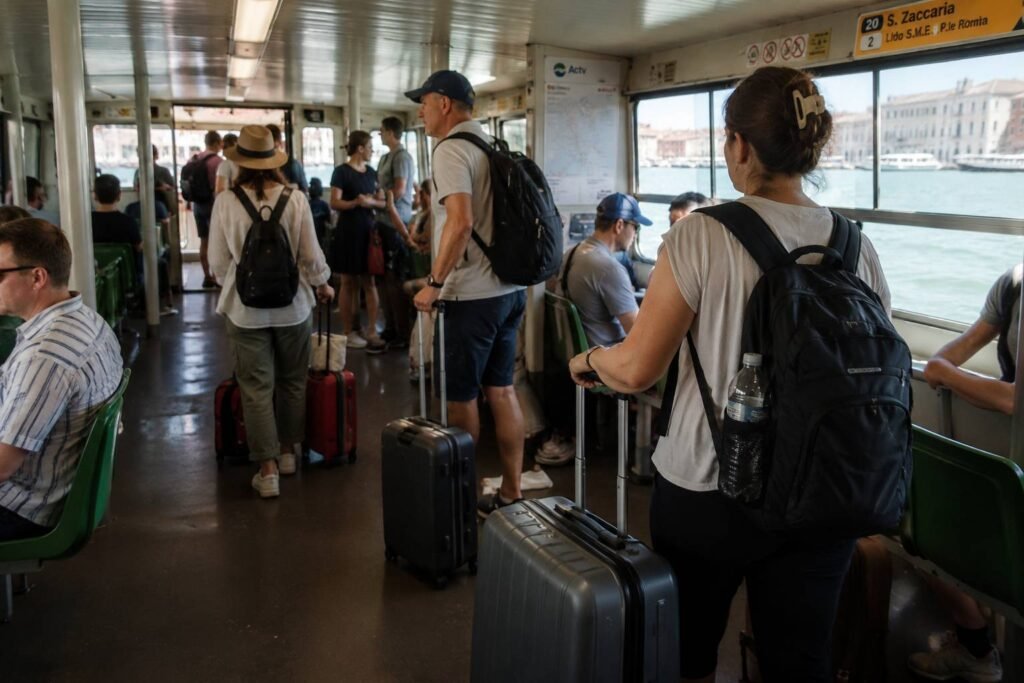
Skip the Heavy Bags: Verified Storage Near Vaporetto Stops
Tugging heavy suitcases onto a crowded water bus is a hassle you can easily avoid. Secure local storage partners are located right by Venice’s main transit hubs, letting you explore or ride light.
Venezia Santa Lucia Station
The absolute best spot for immediate drop-off right as you arrive by train before catching Line 1 or Line 2.
Rialto Bridge
Grand Canal corridor hub, ideal if your hotel check-in is hours away.
San Marco
Near the historic heart of Venice so you can navigate narrow alleys unburdened.
Venice Vaporetto Luggage: Rules, Allowances & Fares
Navigating Venice’s public water buses with suitcases is entirely manageable when you understand the official ACTV parameters. Here is everything you need to know about size allowances, onboard handling, and compliance.
Free Allowance & Rules
- Standard Allowance: Each ticket holder is allowed up to 3 total bags free of charge (two under 120 cm and one between 120–150 cm). Excess or oversized baggage requires an extra fare ticket.
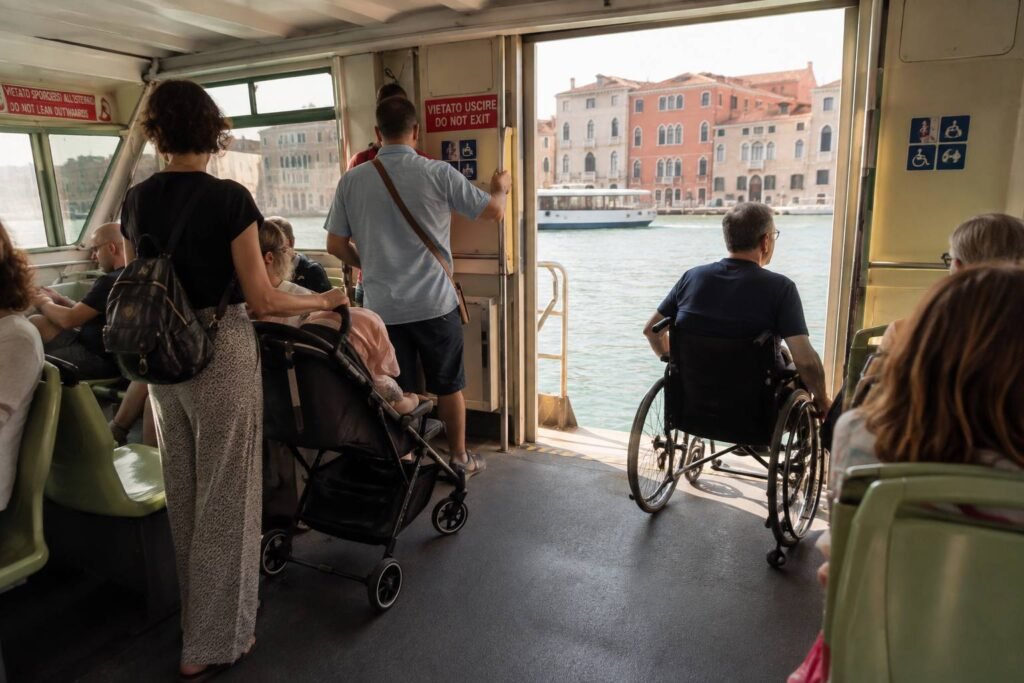
- Strollers & Mobility: Foldable baby strollers and wheelchairs for reduced mobility travel free.
- Musical Instruments: Fully permitted as long as total dimensions do not exceed 220 × 100 × 60 cm.
Handling & Placement
- No Staff Help: You must load, carry, and unload your own bags; boat crews do not handle luggage.
- Placement: Keep aisles clear by placing large suitcases near entry doors or open deck areas, and hold small bags on your lap.
- Tidal & Hull Motion: Always keep a firm hand on rolling luggage when the boat pulls away or rocks against the pontoon.
Why Extra Fares Apply
Vaporettos function as public commuter water buses. Because excessive luggage occupies valuable standing room that could serve another passenger, standard limits help maintain equitable passenger flow.
Self-Sufficiency
There are no cargo holds on vaporettos. Your belongings travel directly with you in the main cabin or out on the open rear deck wherever space allows.
Important Notice Regarding Excess Luggage & Penalties
If you bring extra bags beyond your permitted allowance or oversized items without purchasing an additional standard passenger ticket fare, you risk facing formal administrative fines and fare evasion penalties during routine ticket inspections by ACTV staff on board.
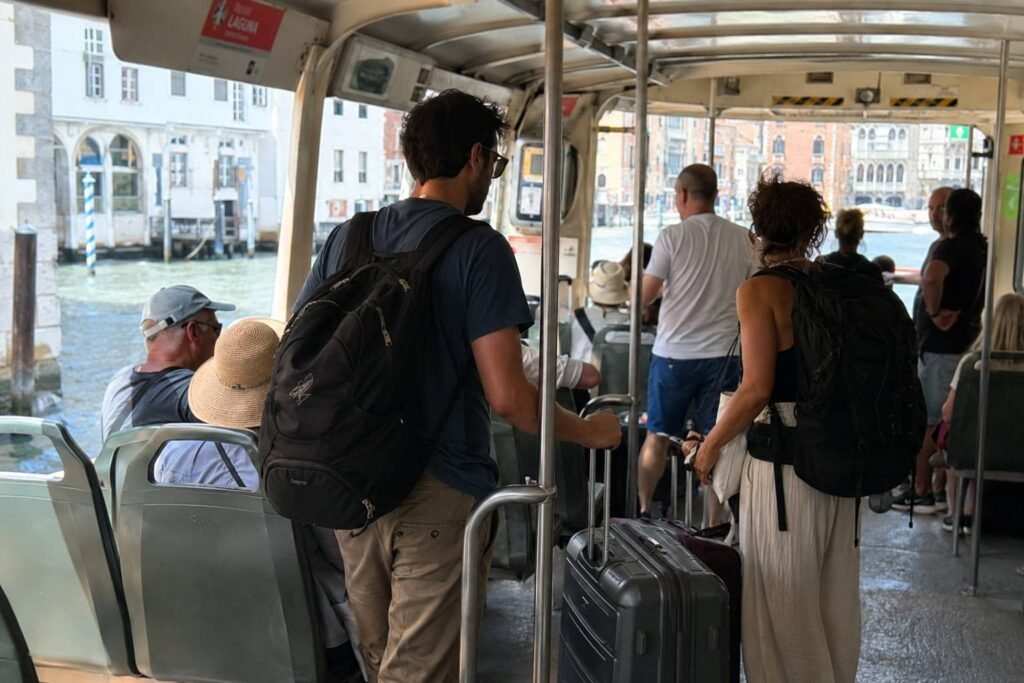
Carrying Musical Instruments on the Vaporetto
Venice’s water buses accommodate musicians, students, and performers traveling with gear across the lagoon, provided they adhere to strict size limitations and safe handling protocols.
Strict Size Limits
Musical instruments are fully permitted onboard as long as their total dimensions do not exceed 220 × 100 × 60 cm.
Fare Inclusion
Instruments fitting within the allowed size threshold are transported as part of your standard ticket or pass allowances without extra surcharges.
Passenger Flow & Safety
Bulky instrument cases must never block emergency exits, aisles, or cabin gangways during high-traffic boarding times.
Handling Hull Motion
Keep a firm grip on your instrument case; the boat rocks noticeably when docking or pulling away from pontoons across open water.
Strollers, Wheelchairs & Reduced Mobility Rules
Venice’s water transport network is designed to accommodate passengers with reduced mobility and families travelling with young children, featuring specific allowances for smooth boarding.
Foldable Baby Strollers
Foldable strollers travel free of charge, provided they are collapsed before boarding to ensure they do not obstruct narrow cabin aisles or exit pathways.
Wheelchairs & Accessibility
Wheelchairs and mobility devices for passengers with reduced mobility are fully permitted and prioritized for barrier-free transit across accessible docks.
Boarding Assistance
Pontoons feature level or ramped access where possible. Crew members are on hand to assist with secure positioning during tidal fluctuations and docking.
Space Management
During peak commuting hours, crews may ask passengers to fold bulky items or position them carefully in open rear deck areas to maintain emergency gangway clearance.
Do You Pay Extra for Luggage?
Your standard vaporetto ticket or multi-day pass covers up to three pieces of luggage free of charge, provided each bag does not exceed 150 cm in total dimensions (length + width + height), with only one piece allowed to measure between 120 cm and 150 cm. However, bringing additional or oversized bags requires you to purchase an extra standard passenger ticket fare for the excess baggage.
Always Validate Your Ticket
Tickets must be validated (tapped on the electronic reader) before boarding, even if you already hold a multi-day pass.
Extra Bags Require Extra Fares
If you are travelling with multiple suitcases per person exceeding the size/quantity limit, each extra bag requires its own standard ticket fare.
Airport Boats vs. City Lines
If you’re arriving via Alilaguna airport boats, note they operate under a separate system and standard city vaporetto passes do not cover that leg.
Strict Inspector Enforcement
Inspectors check regularly on high-traffic tourist routes. Make sure every person and extra paid item has a validated code to avoid hefty fines.
Choosing the Right Line When You’re Carrying Bags
Not all vaporetto lines are equally practical for travellers dragging suitcases. Some routes are direct and relatively spacious; others wind through narrow, crowded stops where a rolling bag becomes a genuine obstacle.
Grand Canal Local
If you’re heading from the train station (Ferrovia) or Piazzale Roma into the heart of the city, Line 1 is usually the most sensible choice for first-time arrivals. It travels the full length of the Grand Canal, stopping frequently, which means you’re rarely more than a couple of minutes from your accommodation once you know your stop.
Grand Canal Express
For a faster, less frequent-stop alternative that still runs the Grand Canal corridor, Line 2 covers similar ground more quickly, which can be worth the trade-off if your hotel is near one of its stops and you’d rather minimize time on board with bags underfoot.
Practical Tips for Travelling With Suitcases
A little preparation goes a long way when luggage and water transport meet. Some tips that make a real difference:
Time your journey outside rush hour
Early morning and early evening are when locals commute, and boats fill fast. Mid-morning to early afternoon tends to be calmer.
Head for the open rear deck
Many vaporetti have an outdoor area at the back with more room to stand a suitcase upright than the enclosed cabin offers.
Keep bags close and stable
The boat rocks noticeably when docking or pulling away, and an unattended suitcase can slide or tip. Keep a hand or a foot against it during those moments.
Board and disembark quickly
Crews keep stops brief, sometimes under a minute, and a wide bag can genuinely slow the flow of passengers. Position yourself near the exit gate a stop before yours.
Avoid stacking multiple large suitcases
It’s tempting for groups to pile bags in one corner, but this blocks walkways and irritates other passengers more than spreading out.
Mind the gap
The gap between the boat and the pontoon shifts with the tide and can be a genuine tripping hazard with a rolling bag in hand — lift rather than roll it across.
Consider a backpack or soft duffel
If you’re only making a quick trip between nearby stops, a bag you can carry on your back frees up both hands for balance.
What About Larger Groups or Extra-Heavy Luggage?
Families or groups travelling with several oversized suitcases sometimes wonder whether it’s worth arranging a private water taxi instead of the public vaporetto for that first transfer into the city. It’s a fair question — water taxis will take you door-to-door and handle luggage for you, at a considerably higher price.
Vaporetto Manageability
For most travellers, the vaporetto remains entirely manageable, even with a full set of suitcases, as long as you plan around crowded periods and choose a sensible route rather than the shortest one on the map.
Bridges & Walking Factors
Venice is a city of bridges, and very few vaporetto stops put you directly outside your accommodation. Expect some walking and likely a bridge or two before you reach your final destination.
Etiquette Around Fellow Passengers
Because the vaporetto is genuinely part of daily life for Venetians — not just a tourist attraction — commuters, students, and elderly residents rely on it every day, often standing shoulder to shoulder with visitors and their bags. A little courtesy goes a long way:
Keep Aisles Clear
Offer to move your suitcase immediately if someone clearly needs to pass or access seating areas.
Seats are for Passengers
Avoid placing bags on seats, especially when the boat is busy and standing room becomes limited.
Mind Peak Commuting Hours
Be mindful during rush hour when locals are trying to get to work or school and have little patience for a slow disembarking process.
Travelling With Pets & Luggage
If you’re travelling with a pet as well as luggage, note that not every route or landing point is equally practical for animals either — Ponte di Rialto isn’t the easiest area for dogs, something worth considering if your itinerary includes both.
The Bottom Line
Bringing luggage on the vaporetto isn’t complicated, but it does reward a bit of planning. There’s no extra fee, no size restriction, and no special ticket required — just a standard fare and a bit of awareness about timing, positioning, and which line actually gets you where you’re going.
Choose With Intention
Choose your route with intention, keep your bags close during boarding and docking, and try to avoid the busiest hours if your schedule allows it.
A Memorable Arrival
Do that, and hauling a suitcase across the lagoon becomes just another small, memorable part of arriving in Venice — rather than the most stressful part of the trip.
10 Most Frequent Questions About Luggage on Vaporettos
Everything you need to know about size limits, ticket requirements, and practical rules for carrying bags across the Venetian lagoon.
01
Is there a separate luggage fee for vaporettos?
▼
Officially, a standard ticket or pass covers normal luggage allowances. However, exceeding standard quantity or size limits requires purchasing an additional standard passenger ticket fare.
02
What are the size and quantity limits for bags?
▼
Each passenger can bring up to three pieces of luggage free of charge, provided they fit size constraints (two bags up to 120 cm combined dimensions, and one up to 150 cm). Anything beyond this requires extra tickets.
03
Do I need to buy a ticket for my suitcase?
▼
Only if you exceed the standard free baggage allowance or carry extra oversized bags. Additional or excessive luggage requires an extra standard passenger fare ticket.
04
Can I bring musical instruments on board?
▼
Yes, musical instruments are fully permitted as long as their total dimensions do not exceed 220 × 100 × 60 cm and they do not obstruct emergency pathways.
05
Are baby strollers and wheelchairs free?
▼
Yes, foldable baby strollers and wheelchairs for reduced mobility passengers travel free of charge across the network, though strollers must be collapsed when cabins are crowded.
06
Where should I place my bags during the ride?
▼
Keep bags close to you in the main cabin or on the open rear deck. Never block aisles, emergency exits, or gangways during boarding and docking.
07
Which vaporetto lines are best for travellers with suitcases?
▼
Line 1 is ideal for first-time arrivals from Ferrovia or Piazzale Roma because it travels the full Grand Canal corridor with frequent stops near accommodations. Line 2 offers a faster, less frequent-stop alternative.
08
Do airport boats (Alilaguna) accept city vaporetto passes?
▼
No. Airport-to-city Alilaguna boats operate under a completely separate ticketing system from the standard ACTV vaporetto network.
09
What etiquette should I follow around commuters?
▼
Move your suitcase immediately if someone needs to pass, never place bags on seats, and remain mindful during peak morning and evening rush hours.
10
Are there cargo compartments on the boats?
▼
No, vaporettos do not feature separate cargo holds. All suitcases and gear must travel with you directly in the passenger cabin or on the open rear deck.