
San Marco: The Most Iconic Vaporetto Stop in Venice 🎭
There are a handful of moments in a traveler’s life that stay with you long after the trip is over. Stepping off the vaporetto at San Marco Vallaresso or San Marco Giardinetti is one of them. This isn’t just getting off a water bus—it’s stepping straight into a Canaletto painting, into the beating heart of the Serenissima.
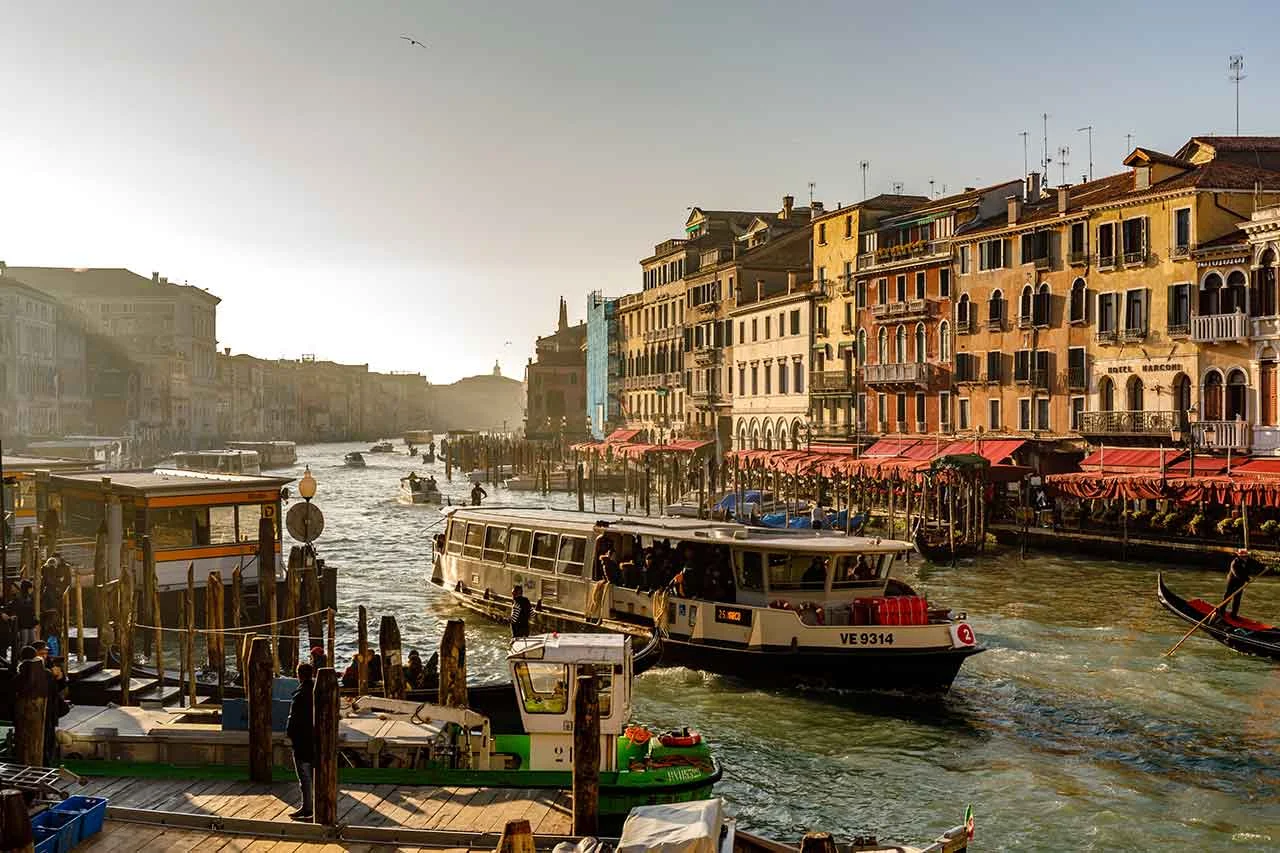
For most visitors, this stop is the main reason they came to Venice in the first place. Positioned at the central gateway of the lagoon, it is one of the busiest and best-connected imbarcaderi in the entire ACTV network—with boats arriving constantly throughout the day. 🏛️🚤
🛥️ Understanding how the lines converge here – and which ponton to head for – makes the difference between a stressful scramble through the crowds and a smooth, memorable arrival that sets the tone for everything that follows.
ACTV Vaporetto Water Bus Pass
Official passes for Venice water buses. Skip the long ticket lines by getting your digital pass online.
The Vaporetto Lines That Serve San Marco
San Marco isn’t served by just one line – it’s a genuine crossroads, and that’s exactly why the pontons here can feel busy at almost any hour.
🚢 Piazza San Marco Live Departures
Real-time upcoming departures departing directly from the Piazza San Marco waterfront piers across core Grand Canal and lagoon corridors.
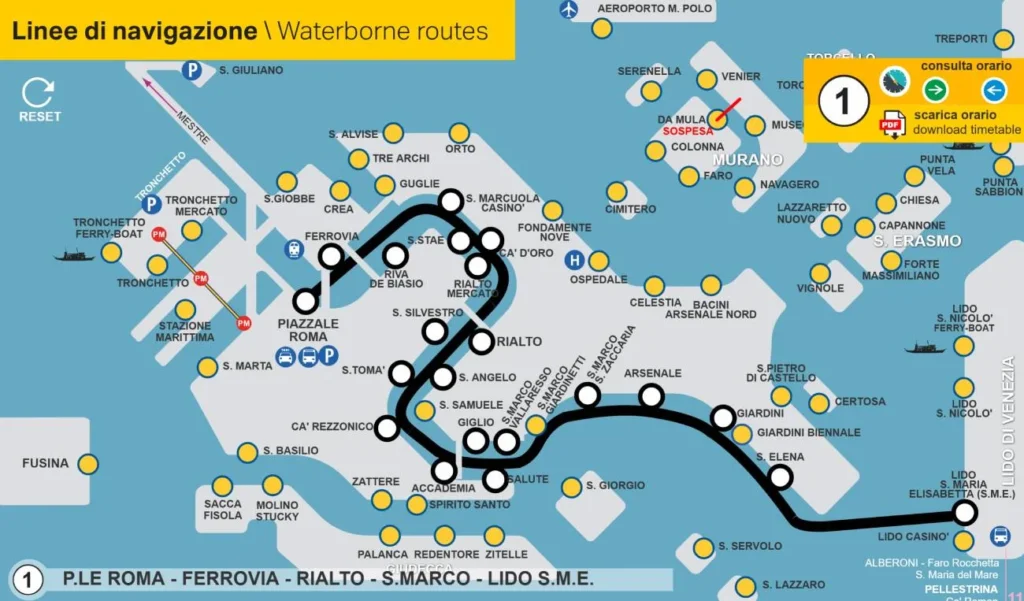
🛥️ Line 1 is the “local” of the Grand Canal. It stops at practically every ponton along the way, making it the slowest option but by far the most scenic – this is the vaporetto you want if the journey itself is part of the experience, and it calls at San Marco Vallaresso before continuing on toward the Lido.
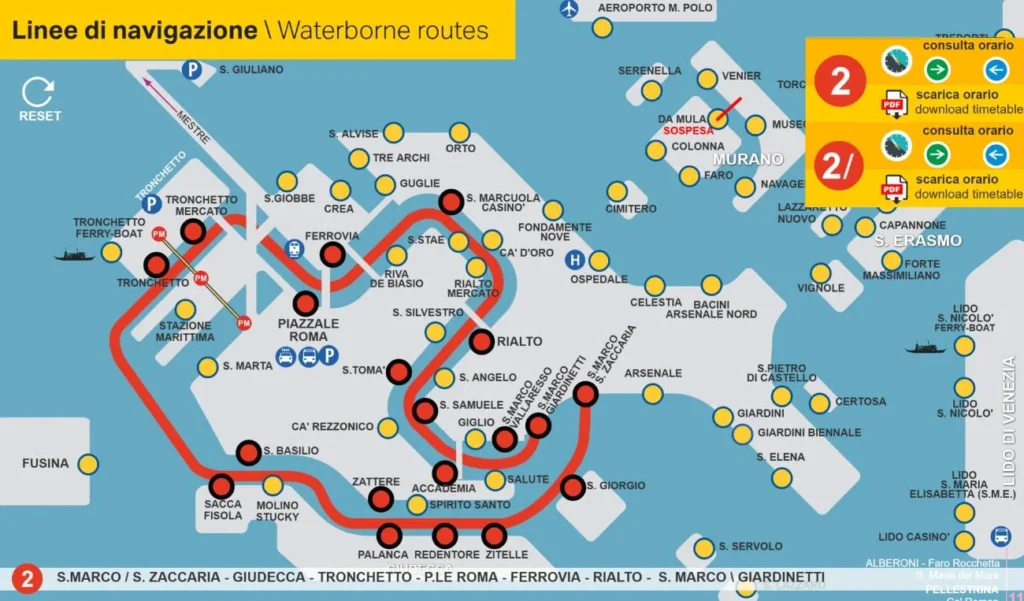
🛥️ Line 2 covers much of the same ground but skips several stops, making it noticeably faster. If you’re heading to San Marco from the train station or Piazzale Roma and you’re short on time, this is usually the better pick, and it also loops down via the Giudecca Canal before reaching the San Marco – San Zaccaria stop.
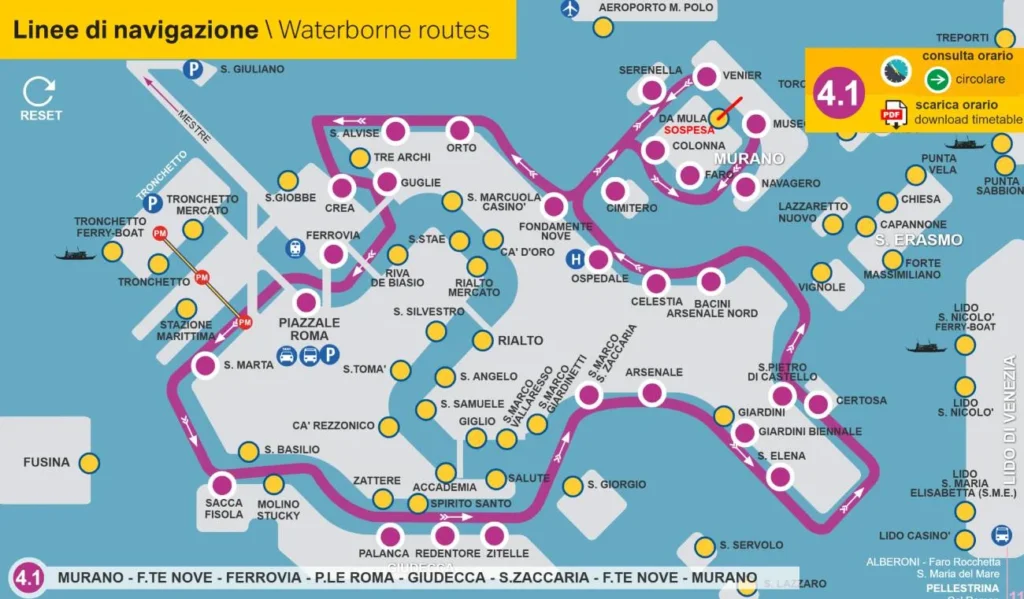
🛥️ Line 4 and Line 5 are the circular routes that trace the outer edge of the city rather than cutting through the Grand Canal, and both call at San Marco–San Zaccaria on their way around – useful if you’re coming from Fondamente Nove, Murano, or the northern lagoon without wanting to backtrack through the center.
Beyond these, a night line keeps running long after the others have stopped for the evening, with San Marco–San Zaccaria as one of its main stops, so even a late dinner near the Piazza doesn’t have to mean an expensive water taxi back to your hotel.
🛥️ It’s worth taking a moment to appreciate just how much traffic funnels through this one stretch of waterfront. Boats arriving from the train station, from Piazzale Roma, from Murano, from Fondamente Nove, and from the Lido all converge here within a few hundred meters of each other, which is part of why the pontons can feel like a small transport hub in their own right during peak hours. Knowing in advance which line you need – rather than working it out on the spot at a crowded ponton – will save you a fair amount of standing around checking the timetable boards while other passengers squeeze past with their suitcases.
The Arrival: A 360-Degree Show
Picture the scene: you’re aboard the Line 1 vaporetto. For the last forty-five minutes you’ve been gliding past marble palaces along the Grand Canal, the boat stopping every couple of hundred meters to let passengers on and off. Then, suddenly, the walls of palazzi fall away. The horizon opens up. The water gets choppier and more alive. You’ve entered the Bacino di San Marco.
🛥️ To your right, the domes of the Salute church rise up. To your left, the ochre and white façades of the Piazzetta begin to unfold. The announcement crackles over the speaker – “San Marco!” – and you’ve arrived. Few urban transport moments anywhere in the world compare to it.
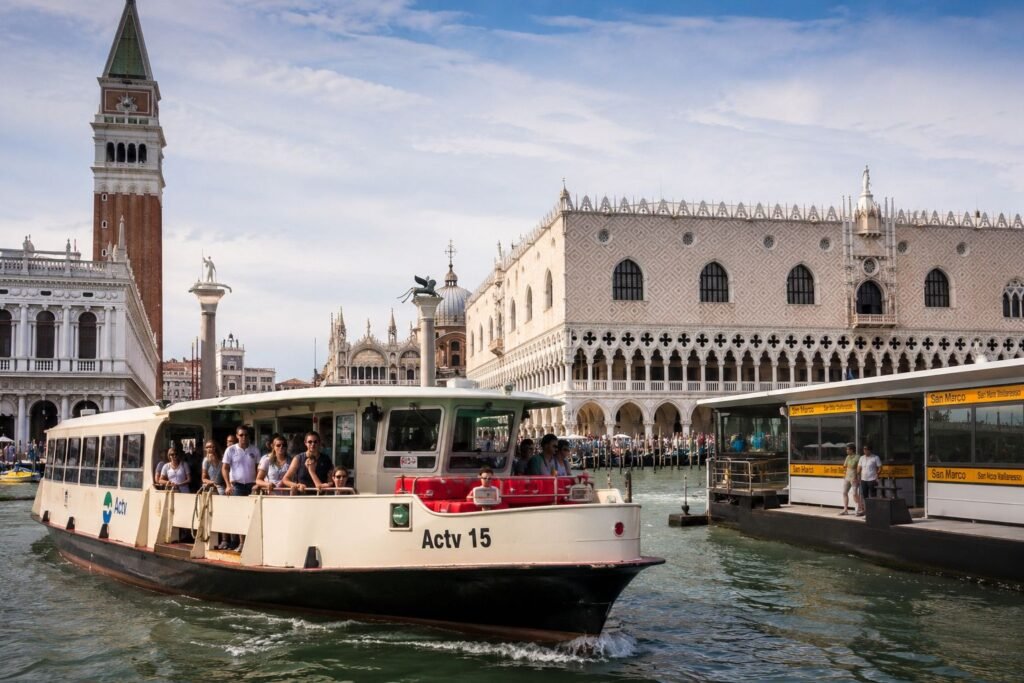
Vallaresso vs Giardinetti: two very different landings
Although they sit only a couple of minutes’ walk apart, these two stops set a very different tone for your visit:
A little further along the waterfront sits San Zaccaria, technically a separate stop but functionally part of the same San Marco hub – it’s where most of the larger vaporettos toward Lido, Murano, and Burano dock, and where you’ll find the ferries to the outer islands. If you’re heading toward the Bridge of Sighs or the Danieli hotel, San Zaccaria is actually the more convenient ponton to aim for.
🛥️ There’s a nice bit of history behind the Giardinetti gardens, too. They were laid out on Napoleon’s orders after he took control of Venice, so that he could enjoy a view over the water from his royal apartments nearby. Older granaries that once stood on the site were torn down to make room for the greenery, which means that stretch of lawn and trees you’re walking through began life as an imperial whim before becoming one of the few genuinely green corners of the historic center.
The Top Sights Within Two Minutes of the Ponton
The moment you step onto the Istrian stone pavement, you’re surrounded by centuries of history. A few things you genuinely shouldn’t rush past:
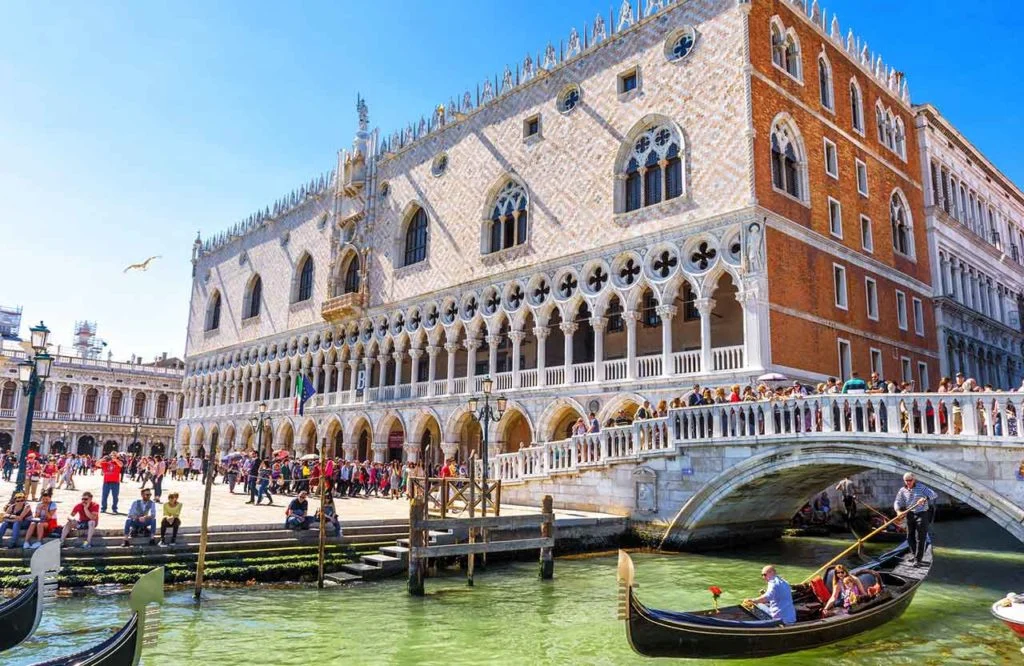
Best Spots for Photography at San Marco
If you want photos that actually do the arrival justice, San Marco Vallaresso is your best bet. The moment you step off the boat, walk toward the row of moored gondolas along the quay – framing their silver prows in the foreground with the church of San Giorgio Maggiore appearing to float in the distance gives you the postcard shot of Venice.
For something a little more cinematic, the wooden entrance of Harry’s Bar makes a great backdrop for a retro-style portrait, while a few steps further into the Royal Gardens gives you soft, filtered light under the arcades – ideal for couple photos away from the crowds. And for a genuinely monumental frame, position yourself between the two Piazzetta columns: shooting slightly upward captures both the scale of the winged lion and the palace’s vanishing perspective under the lagoon sky.
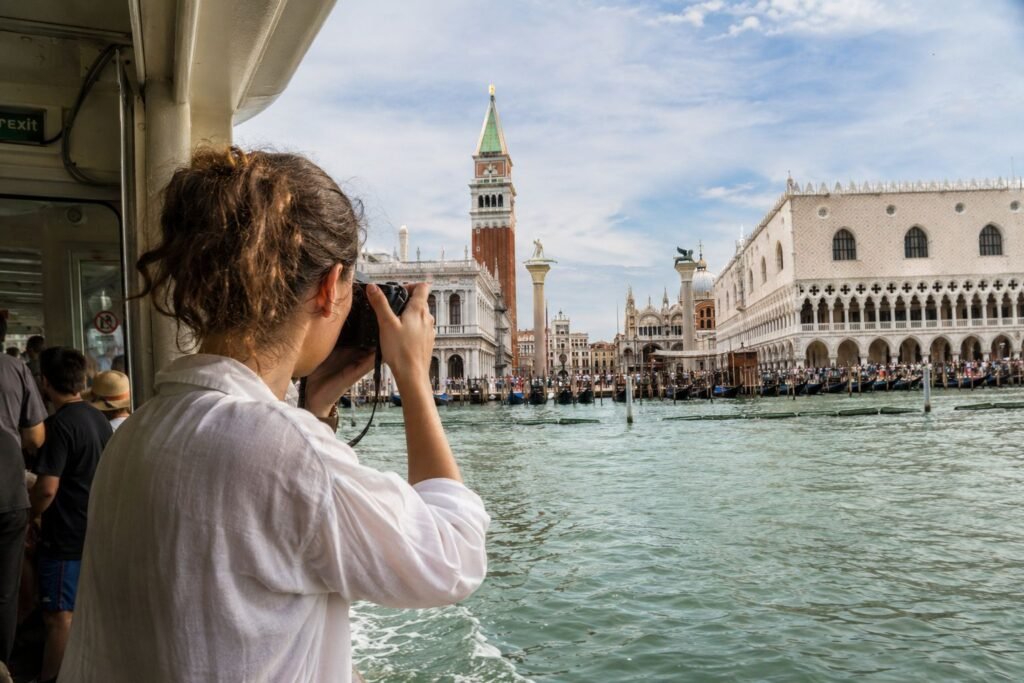
🛥️ One practical tip: have your camera ready a few minutes before the boat pulls in. The final approach into the Bacino di San Marco happens fast, and that first glimpse of the Basilica from the water is easy to miss if you’re still fumbling with your phone.
A Word on Tickets
Given how many lines converge here, San Marco is one of the easiest places in Venice to end up paying more than you need to – or worse, riding without a valid ticket. A single vaporetto ride is billed as a 75-Minute Ticket, which lets you hop between connecting lines within that window, handy if you need to change boats to reach your final stop.
If you’re planning to move around Venice more than a couple of times in a day – and around San Marco, most people do – a 24-hour ticket tends to work out far more convenient, since it removes the need to validate a new ticket every time you board. Whichever you choose, make sure it’s validated and still active before you step onto the ponton; inspectors do check, and an invalid ticket can put a real dent in an otherwise perfect afternoon.
Because San Marco sees so many lines passing through, it’s also one of the spots where inspectors tend to check tickets most frequently, simply because the volume of passengers boarding and disembarking is so high. It’s not meant to catch anyone out – it’s more a reflection of how central this stop is to the whole network – but it’s a good reason to keep your ticket somewhere easy to reach rather than buried at the bottom of a bag.
| Vaporetto | Price | Tickets |
|---|---|---|
| 75-Minute | 12.00 € | Book Online |
| 24-Hour | 23.50 € | Book Online |
| 48-Hour | 40.00 € | Book Online |
| 72-Hour | 50.00 € | Book Online |
| 7-Day | 70.00 € | Book Online |
| + Murano + Burano | 37.00 € | Book Online |
| + Shuttle | 24.00 € | Book Online |
| + Water Taxi | 51.00 € | Book Online |
| + Ca’ Pesaro | 27.00 € | Book Online |
Where to Eat Around Piazza San Marco
It’s easy to eat badly near San Marco – the area is thick with tourist-trap menus and photo-illustrated boards designed to catch a hungry, jet-lagged traveler’s eye. But if you know where to look, there are still a few genuine landmarks worth the price of admission.
🍽️ Harry’s Bar, just steps from the Vallaresso ponton, is a piece of culinary history rather than just another café. This is where Giuseppe Cipriani invented both the Bellini and carpaccio, and while a drink here isn’t cheap, the hushed atmosphere and impeccable service make it worth experiencing at least once.
🍽️ Caffè Florian, tucked under the arcades of the Piazza itself, is one of the oldest coffee houses in the world – and let’s be honest, it’s also a full-blown tourist trap. A simple coffee here can run you the price of a proper meal elsewhere, and the “orchestra cover charge” catches plenty of visitors off guard when the bill arrives. You’re paying almost entirely for the setting and the name, not the coffee. If you want to say you’ve sat where Casanova reportedly once did, it’s worth doing once – just go in with your eyes open about what you’re paying for.
🍽️ If you’d rather skip the theater altogether, Osteria Enoteca San Marco, tucked down a quiet side street just a few minutes’ walk from the Piazza, is about as close as you’ll get to an authentic meal this near the square. It doesn’t announce itself with a picture menu or a tout at the door, which is exactly why most tourists walk straight past it. Inside, you’ll find a genuinely seasonal menu, an excellent wine list with plenty of options by the glass, and a kitchen that treats Venetian classics with real care rather than serving up the reheated, laminated-menu version most places nearby offer. Reservations are worth making – it fills up fast with people who’ve done their homework.
🍽️ For something quicker and considerably lighter on the wallet, duck into the side streets behind Vallaresso and look for Rosa Salva, a historic bakery on Calle Fiubera just a few minutes north of the square. It’s been serving Venetians since the 19th century and is known for its tramezzini, the soft, crustless Venetian sandwiches typically filled with shrimp, tuna, or egg and mayonnaise. It’s the closest thing Venice has to proper street food, and it’s a far better lunch option than most of the sit-down spots ringing the square.
Practical Tips for a Smooth Stop
A few small things can make a real difference to your experience here:
A Stop Worth Savoring
San Marco is far more than a set of GPS coordinates on a lagoon map – it’s the emotional high point of a trip to Venice for most travelers who pass through it. Whether you arrive for the art, the history, or simply the thrill of watching the water shimmer as the boat pulls in, this stop tends to be the one people talk about long after they’ve gone home. Plan the timing, pick the right line, and it just might become the moment your whole trip is remembered by.
🛥️ And if there’s one thing worth carrying with you beyond the photos, it’s the sense of arrival itself – the way the Grand Canal opens into the lagoon, the first glimpse of the Basilica’s domes catching the light, and the quiet realization that you’ve finally reached the place every postcard of Venice has been trying to capture all along.
Which vaporetto line should I take to get to San Marco?
Line 1 is the slow, scenic option that hugs the entire Grand Canal. Line 2 covers similar ground but skips stops, so it's faster. Lines 4 and 5 loop around the outer edge of the city and also call at San Marco–San Zaccaria if you're coming from Fondamente Nove or Murano.
How long does it take to get from Piazzale Roma or the train station to San Marco?
Line 1 takes around 45 minutes since it stops everywhere along the way. Line 2 is quicker, usually landing you at San Marco in about 25–30 minutes.
Is there a night vaporetto to San Marco?
Yes. A dedicated night line keeps running after the daytime lines stop, with San Marco–San Zaccaria as one of its regular stops, so you're not stuck relying on a water taxi late in the evening.
Can I take a vaporetto from San Marco to the airport?
Not directly on the standard ACTV network. Airport transfers run on separate Alilaguna boats, which have their own pontons close to San Marco and require a separate ticket.
Is the San Marco vaporetto stop accessible for wheelchairs or strollers?
Yes, the boats have ramps and the pontons themselves are level. Once you're on land, the walk to the Piazza is flat from Vallaresso, though other directions may involve small bridges.
What happens at the San Marco stop during acqua alta?
The pontons themselves keep floating and stay usable, but the Piazza can flood under a layer of water during the highest tides. Raised wooden walkways are put up when this happens, so you can still get from the boat to dry ground.
How do I get to Murano, Burano, or Torcello from San Marco?
The most direct route is to head to San Zaccaria and pick up the relevant island-bound service from there, rather than going by way of Fondamente Nove.
Is San Marco a good stop to bring a dog on the vaporetto?
It's one of the more difficult stops for it — the boats and pontons get crowded, which makes it harder to manage a dog comfortably. It's worth checking what to expect on the vaporetto with dogs before planning a route through here.
What ticket do I need for a single trip to San Marco?
A standard 75-minute ticket covers a one-way trip, including any line changes within that window. If you'll be making several trips in a day, a 24-hour ticket usually works out simpler and more convenient.