
Ferrovia / Santa Lucia: Your First and Last Vaporetto Stop in Venice
For most visitors, Venice doesn’t begin at a hotel door or a quiet campo — it begins the moment they step out of Santa Lucia train station and see the Grand Canal stretched out in front of them. Right there, just beyond the station’s steps, sits one of the busiest and most important water bus stops in the whole city: Ferrovia, sometimes simply called Santa Lucia. Whether you’re arriving for the first time, catching a connecting train later, or just passing through on your way to another part of the city, chances are this stop will be part of your Venice story.
This guide walks through everything worth knowing about the Ferrovia vaporetto stop — where it sits, which lines call here, how to find the right dock, and a few tips that make the whole experience less overwhelming. 🚆✨
Where Rail Meets the Grand Canal: Ferrovia Santa Lucia
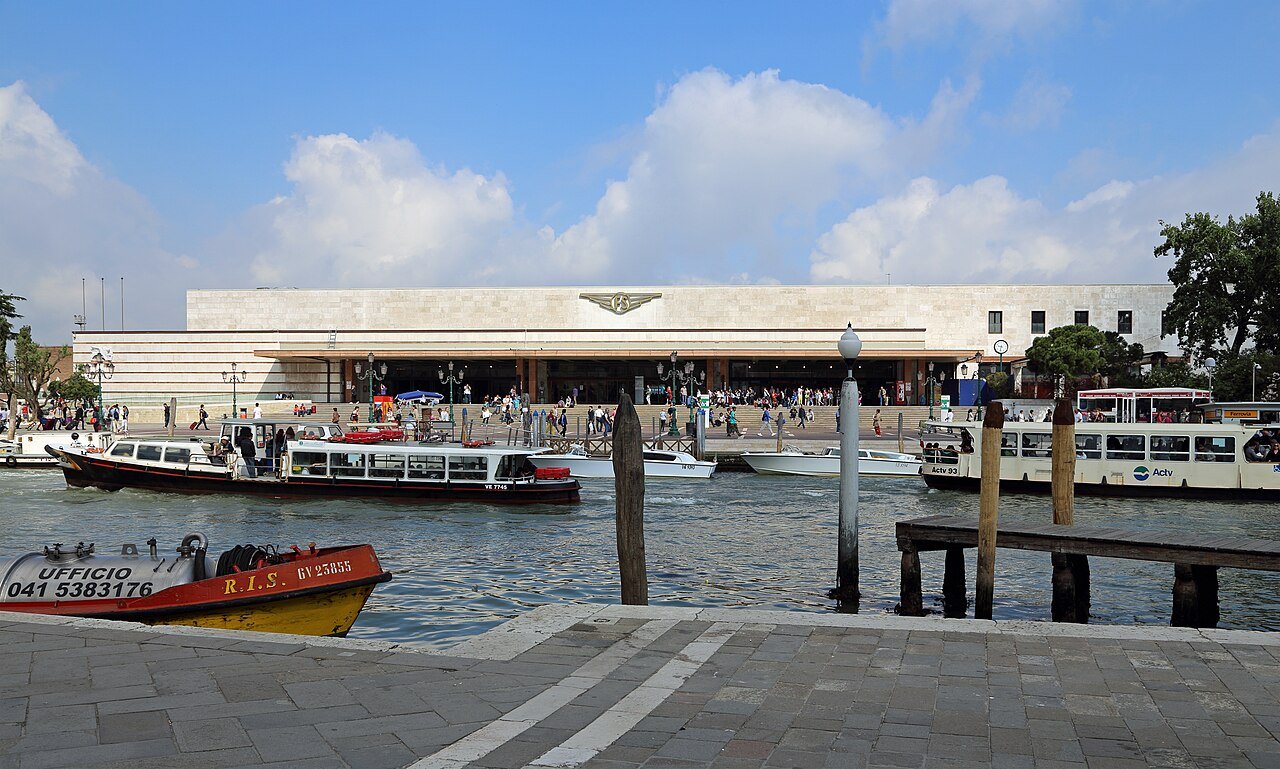
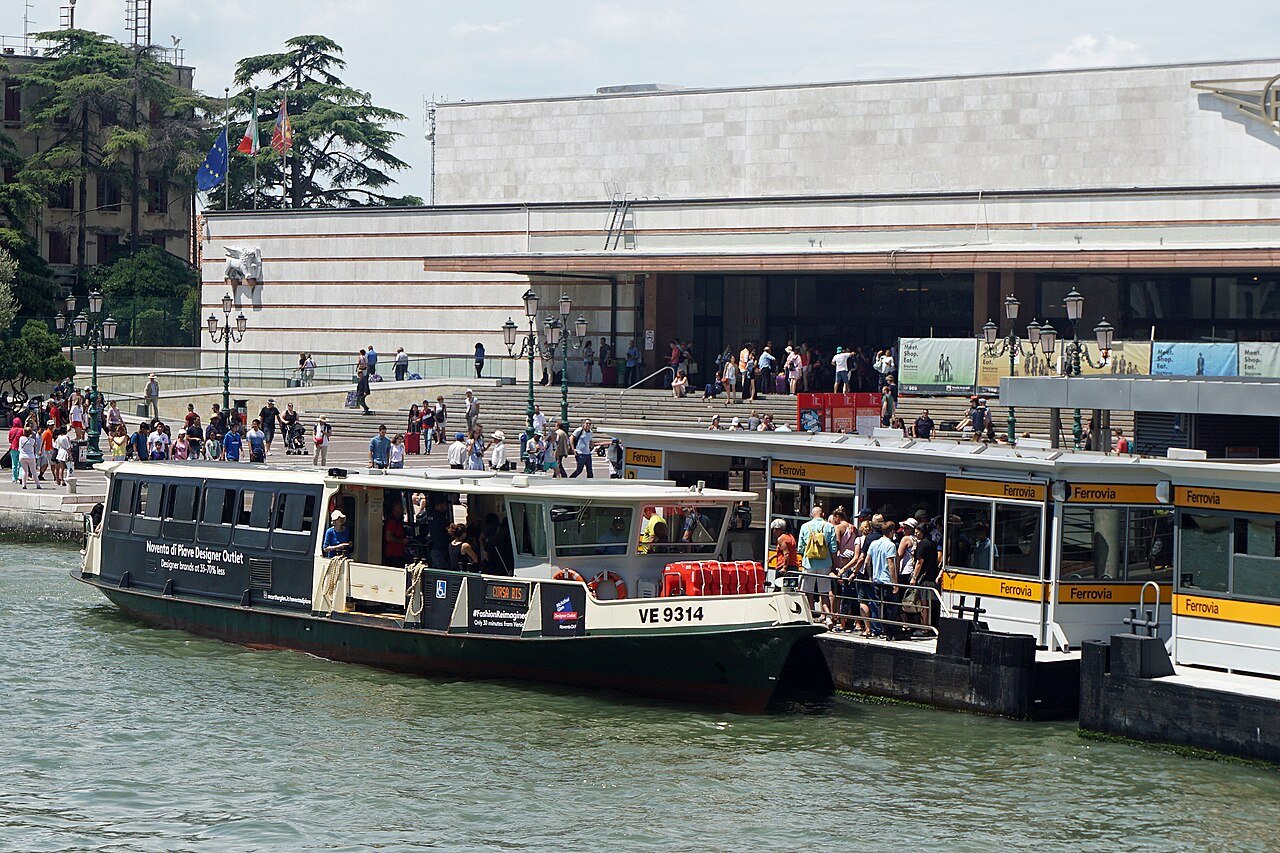
Positioned right at the threshold of the Venice railway station, the Ferrovia / Santa Lucia terminal functions as the ultimate rail-to-water interface. It is where thousands of arriving train passengers seamlessly transition from steel tracks onto the public water transport system.
Why This Terminal Matters
Understanding how this hub operates, which Grand Canal routes connect here, and how to navigate the piers can transform an overwhelming train arrival into a smooth start to your Venetian adventure.
🚢 Ferrovia / Santa Lucia Live Departures
Real-time upcoming departures pulling away directly from the Ferrovia / Santa Lucia station piers across key Grand Canal corridors, outer loops, and lagoon routes.
Why Ferrovia Matters So Much
Part of what makes this stop special is simply how much happens around it. It’s often the very first glimpse visitors get of Venice’s famous water-based way of life — the moment the city stops being an idea and starts being a place you can actually see, hear, and smell.
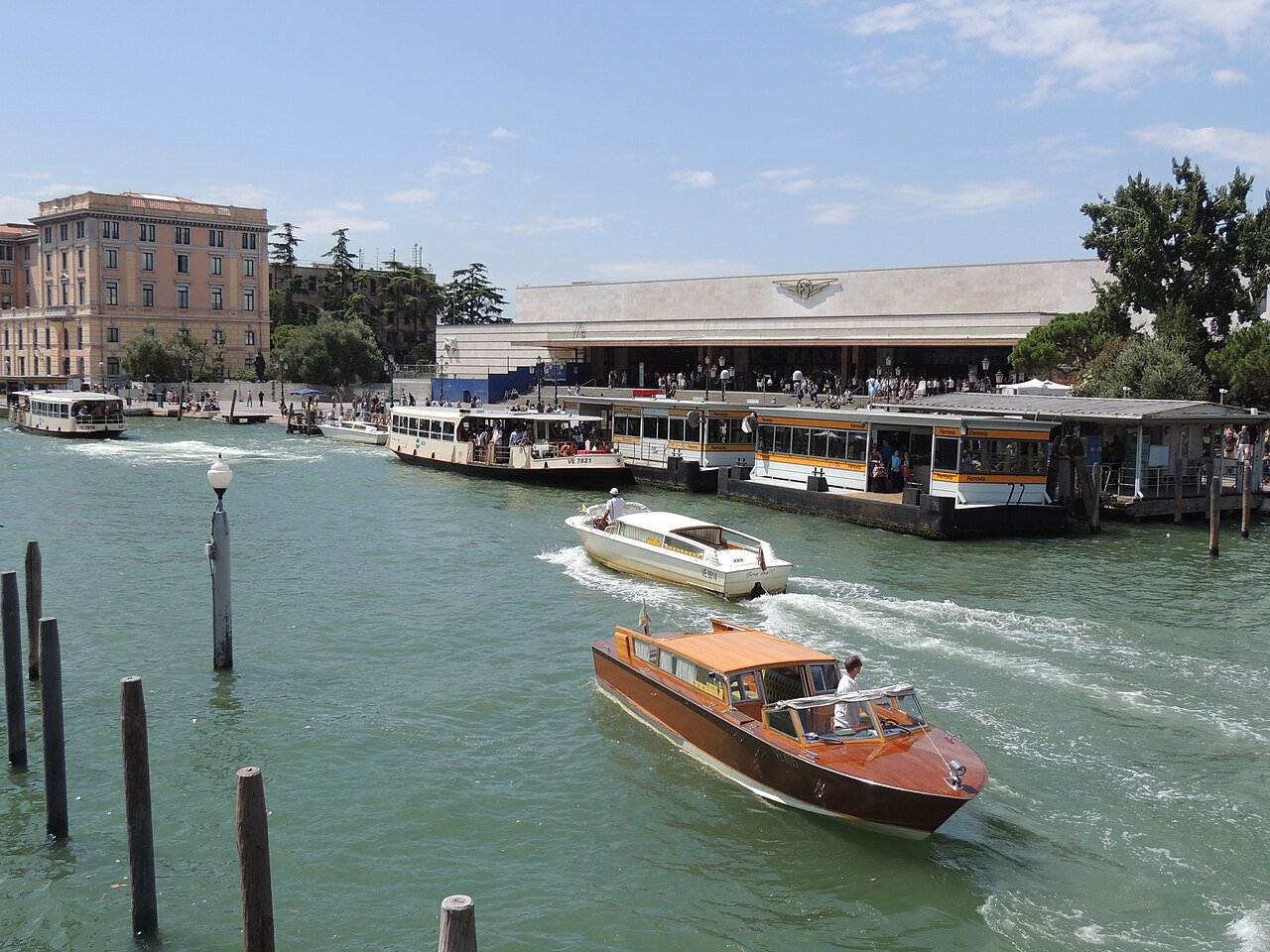
The mix of vaporetti pulling in and out, the water taxis idling nearby, and the constant hum of the canal creates an atmosphere that’s hard to find anywhere else in the world. It’s also exceptionally useful: because Santa Lucia station handles so much traffic, Ferrovia is one of the most reliably frequent stops on the network.
Are trains going to Ferrovia?
Yes, absolutely. Venezia Santa Lucia is a major terminus station. Trains pull directly across the lagoon bridge right onto the edge of the Grand Canal at Ferrovia.
National or International?
Both. Santa Lucia handles heavy traffic from across Italy (Rome, Milan, Florence via high-speed Frecciarossa and Italo trains) as well as direct international connections (such as EuroNight and trains from Austria, Germany, and France).
Are cars going to Ferrovia?
No. Venice’s historic center is completely pedestrianized. Cars, buses, and motor vehicles cannot reach Ferrovia. They must stop further back at Piazzale Roma (the very end of the Ponte della Libertà bridge), which is the absolute limit for rubber-tired vehicular traffic.
Is the tram arriving in Ferrovia?
No. The modern Venice tram network (coming from Mestre and Marghera) terminates at Piazzale Roma, not Ferrovia. From Piazzale Roma, you either walk across a short pedestrian bridge or take a 1-stop vaporetto to reach Ferrovia.
Why is everything not together at the same spot as Piazzale Roma?
It comes down to geography and city design. Piazzale Roma was built in the 1930s as a modern vehicle terminal and parking lot where the causeway from the mainland hits the island. Because cars and buses require massive asphalt footprints and land space, they couldn’t be brought deep into the historic lagoon.
Meanwhile, Santa Lucia Station (Ferrovia) was built slightly further east along the Grand Canal to accommodate the railway coming across the lagoon. This creates two distinct multi-modal gateways separated by just a short 5-minute walk or a single vaporetto stop:
- Piazzale Roma: The hub for land vehicles (cars, parking garages, mainland buses, and trams).
- Ferrovia: The hub for railway arrivals opening directly onto the Grand Canal.
Luggage Storage Solution Near Ferrovia
Dragging heavy suitcases across Venice’s arched bridges and narrow cobblestone alleys is exhausting. If you arrive early or want to explore luggage-free before checking into your hotel, utilizing a secure left-luggage network near the station is a lifesaver.
Understanding the Night Line (Linea N)
When the clock strikes midnight and daytime lines (like 1 and 2) shut down, Venice doesn’t stop moving. Line N (Linea Notturna) is the city’s dedicated night water bus, keeping the lagoon connected until dawn.
What exactly is the Night Line?
It is a special vaporetto service that operates roughly from 11:30 PM to 5:30 AM. It merges the most critical parts of daytime routes, acting as a “sweeper” line that ensures no one is stranded on the islands or in the city center overnight.
Why does it go to Santa Lucia (Ferrovia)?
Even though trains don’t arrive at 3:00 AM, the station area remains a massive hotel hub. Furthermore, Ferrovia is just one stop away from Piazzale Roma, where travelers must go to catch late-night or early-morning airport buses to the mainland.
Is it a good idea to take it?
Absolutely. Getting lost in Venice’s dark, winding alleys at 2:00 AM is incredibly easy (and exhausting with luggage). The N line is safe, reliable, and offers a hauntingly beautiful, quiet view of the Grand Canal that few tourists ever see.
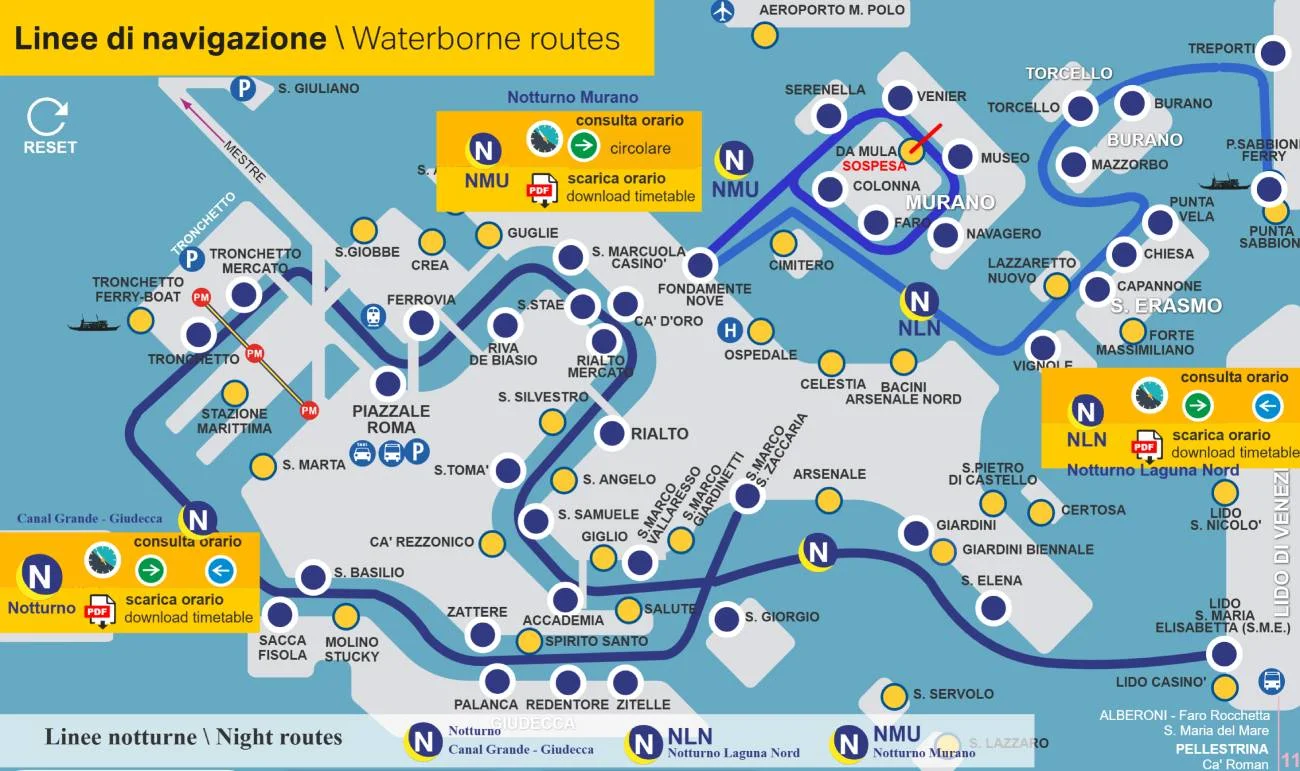
Official Line N Route Map
Tap the preview below to inspect the nighttime navigation network in full detail:
 🔍 Click to enlarge map
Is it a famous line? Are people using it?
It is legendary among locals, shift workers, and seasoned travelers. While you won’t see the crushing midday tourist crowds, it is consistently used by late-night diners, hospital staff, and travelers catching 6:00 AM flights. You will rarely be alone on the boat.
Where does it go? (Main Destinations)
Line N traces a massive loop through the most important hubs in Venice, essentially replacing Line 2 for the night:
The Grand Canal Arteries: Complete Route Guides
Stepping out of Santa Lucia station places you directly on the edge of the Grand Canal, where key water bus corridors bridge rail transit straight into the heart of Venice and the lagoon.
Each route calling at Ferrovia serves distinct travel patterns—ranging from the all-day slow scenic crawl of the Grand Canal to express cross-canal connections, direct Murano runs, and outer ring links.
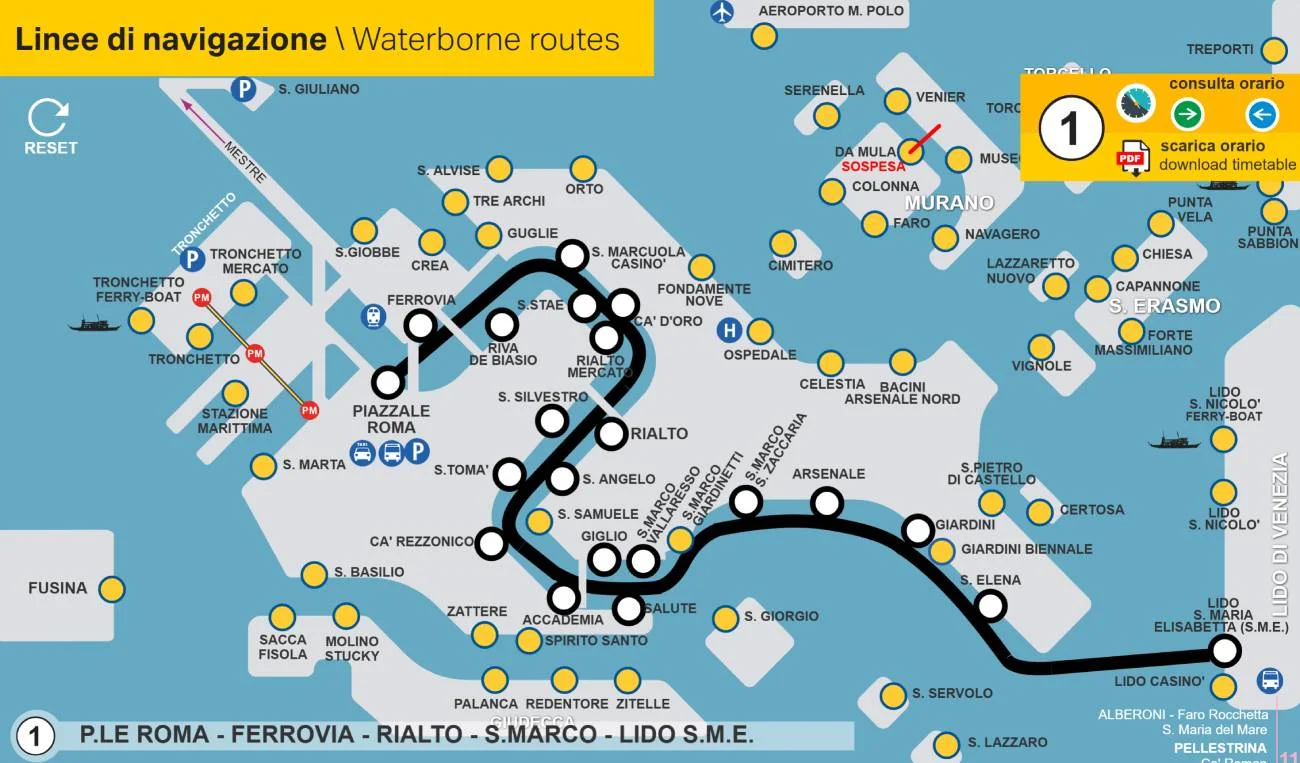
The classic serpentine route that stops at every historic palazzo between Ferrovia, Rialto, San Marco, and the Lido.
 🔍 Click to enlarge map
The classic serpentine route that stops at every historic palazzo between Ferrovia, Rialto, San Marco, and the Lido.
🔍 Click to enlarge map
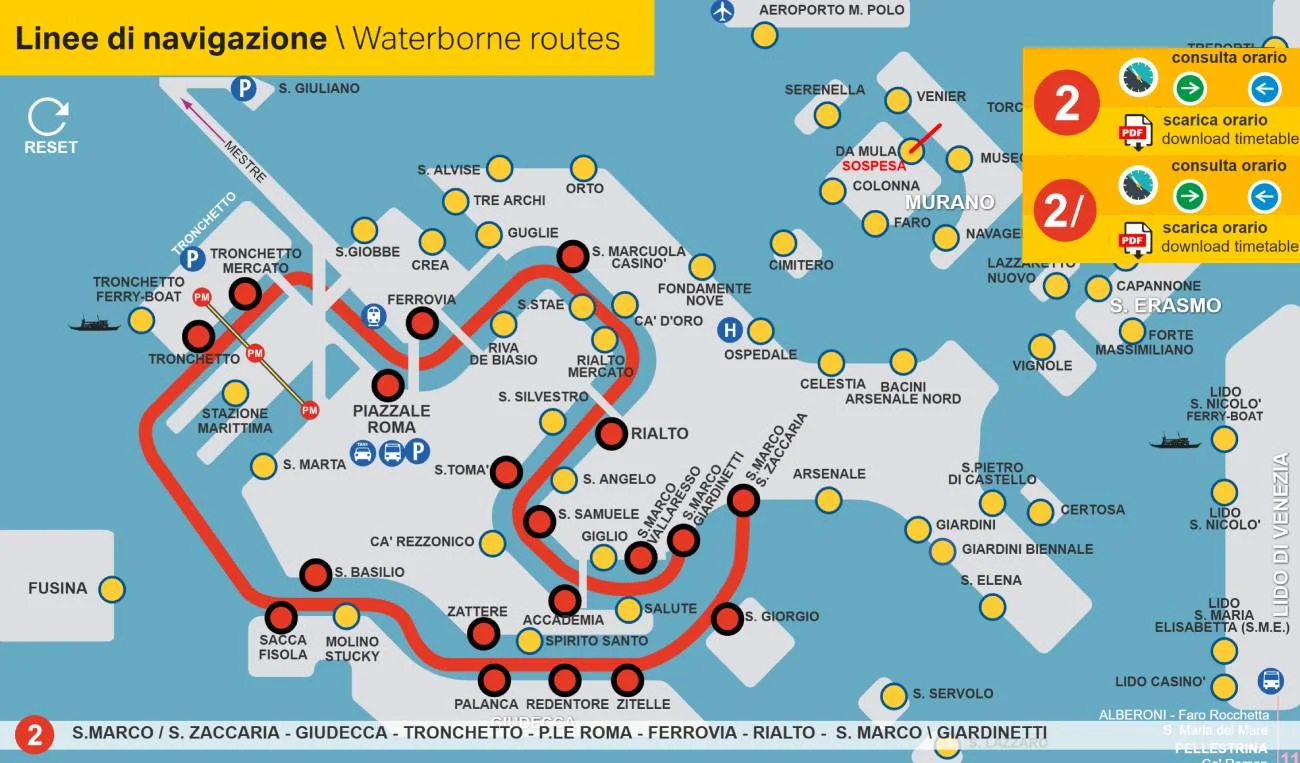
A faster semi-express service connecting Ferrovia through Rialto down to San Zaccaria and Giudecca.
 🔍 Click to enlarge map
A faster semi-express service connecting Ferrovia through Rialto down to San Zaccaria and Giudecca.
🔍 Click to enlarge map
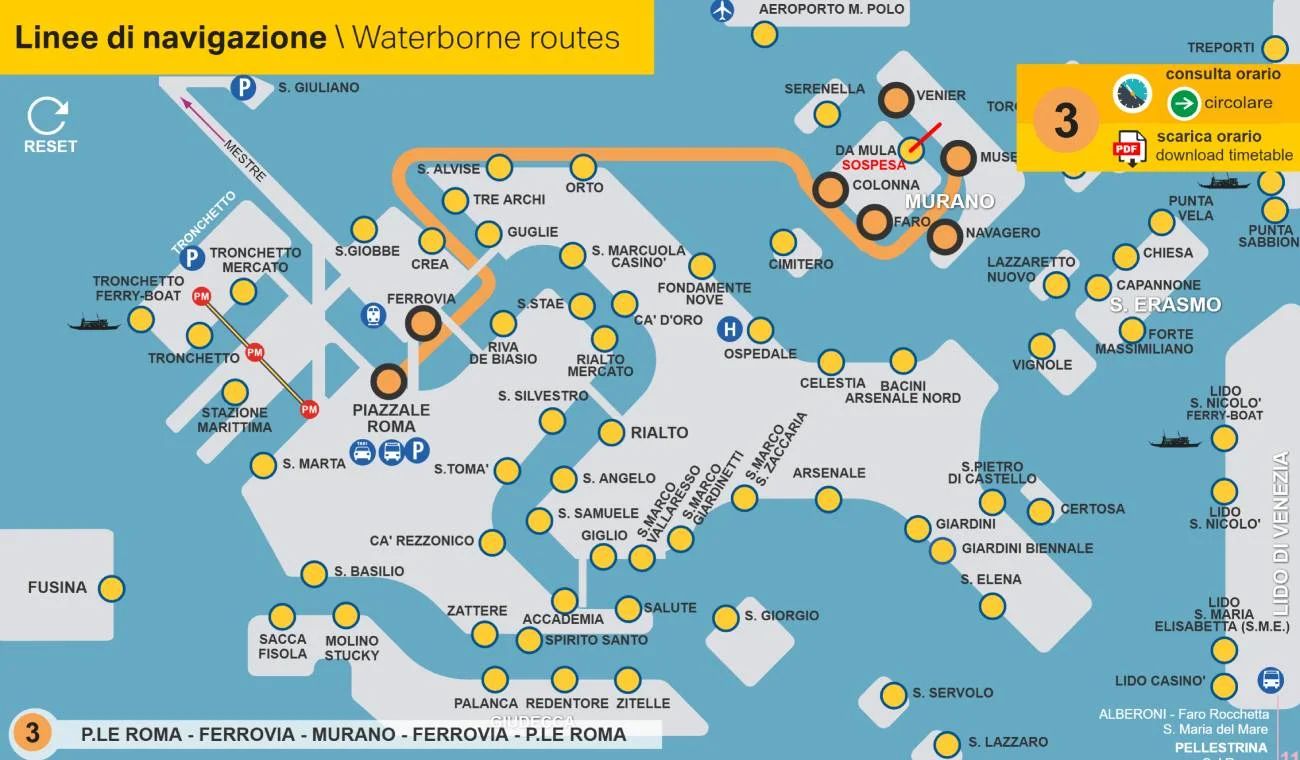
A dedicated daytime express route connecting rail arrivals directly to the glass-making island of Murano.
 🔍 Click to enlarge map
A dedicated daytime express route connecting rail arrivals directly to the glass-making island of Murano.
🔍 Click to enlarge map
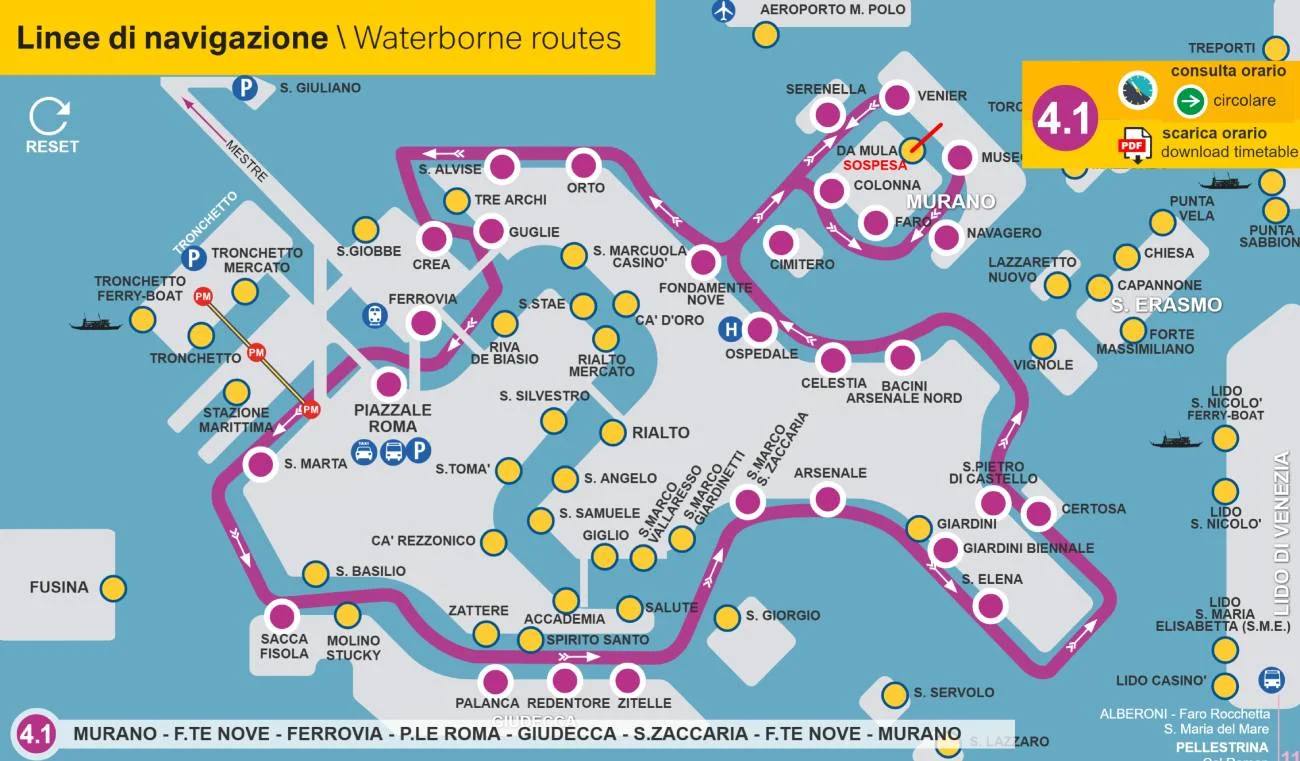
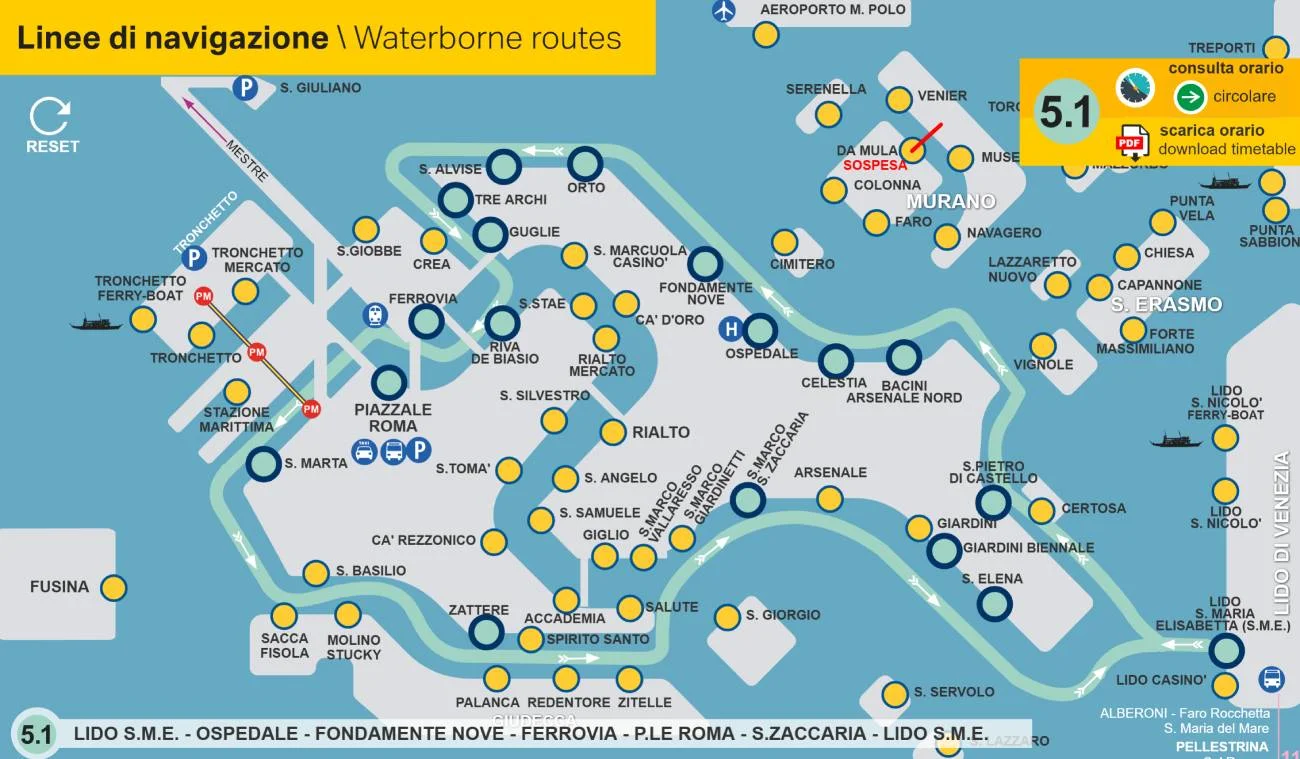
The outer-loop network schema detailing circular routes connecting Fondamente Nove, Murano, and the southern basins.
 🔍 Click to enlarge map
The outer-loop network schema detailing circular routes connecting Fondamente Nove, Murano, and the southern basins.
🔍 Click to enlarge map
The outer circular network route schema detailing clockwise and counter-clockwise loop intervals connecting Ferrovia, Fondamente Nove, and the Lido.
 🔍 Click to enlarge map
The outer circular network route schema detailing clockwise and counter-clockwise loop intervals connecting Ferrovia, Fondamente Nove, and the Lido.
🔍 Click to enlarge map
Your Perfect Day Trip: From Train Station to Grand Canal & Beyond
Arriving by train in Venice? Don’t stress the transit grid. Here is a step-by-step, easy-to-follow master plan utilizing the backbone Line 1 network, taking you straight from Santa Lucia station into the heart of the Grand Canal, out to the islands, and back without missing a beat.
Stepping Out at Ferrovia
Walk out of Santa Lucia station, head straight to the docks, and catch the classic Line 1 water bus for a scenic serpentine cruise down the Grand Canal.
Rialto & San Marco Exploration
Cruise past historic palazzos, get off near the Rialto Bridge or San Marco, and spend your morning exploring the heart of the historical center.
Afternoon Murano Glass Trip
Hop onto connecting lines to visit the world-famous glassmaking island of Murano, watching master artisans shape glowing molten glass.
Seamless Return to Station
Catch the direct water bus connection back to Ferrovia / Santa Lucia just in time for your evening departure train, watching the sunset over the lagoon.
Finding the Right Dock at Ferrovia / Santa Lucia
Stepping off the train can be overwhelming. One detail that catches a lot of first-time visitors off guard is that “Ferrovia” isn’t a single dock, but a cluster of them.
Docks are lettered from A through E (layouts can shift slightly during maintenance, but the labeling system stays consistent). Each line uses a specific pontoon—and a specific side of that pontoon—since boats heading in opposite directions often share the same platform.
Typically handles express lines and western Grand Canal axes.
Dedicated to slow backbone lines, outer rings, and lagoon island links.
Practical Pointers for First-Timers
Tickets for the Vaporetto
Before boarding at Ferrovia — or any vaporetto stop in Venice — you’ll need a valid ticket, and it’s worth sorting this out before you’re standing at the dock with a boat about to leave.
Tickets can be bought from the machines right at the stop, from staffed ticket booths, or in advance online, and they need to be validated before you board.
75-Minute Ticket
Covers unlimited transfers within that window, which is handy if your route involves switching lines.
24-Hour Pass
If you’re staying a bit longer and expect to hop on and off frequently, this often works out more convenient and cost-effective.
2-Day Pass
Makes sense if you’re planning multiple crossings each day or exploring deeper into the lagoon.
72-Hour Ticket
Ideal for longer itineraries and dedicated day trips out to the outer islands like Murano and Burano.
Accessibility & Luggage Navigation Guide
Passing through the Ferrovia / Santa Lucia railway gateway with mobility aids, strollers, or heavy bags requires knowing how each specific water route handles boarding ramps, vessel layouts, and luggage capacity.
Boarding Ramps & Mobility
Ferrovia floating docks feature level-access ramps. However, tidal variations and vessel types dictate wheelchair, stroller, and scooter accessibility across different lines.
Bags & Dimensions Rules
Standard tickets include one free luggage item under 150 cm total dimensions. Oversized suitcases, bulky gear, or extra pieces require standard ticket validation or a luggage supplement.
Secure Left-Luggage Solution Near Ferrovia
Dragging heavy suitcases across Venice’s arched bridges and narrow cobblestone alleys is exhausting. If you arrive early or want to explore luggage-free before checking into your hotel, utilizing a secure left-luggage network near the station is a lifesaver.
Passenger & Ferry Route Breakdown: Lines 1, 2, 3, 4, 5 & N
The Grand Canal Slow Backbone
Operated with standard vaporetti featuring wide sliding doors. Highly friendly for large suitcases, wheelchairs, and strollers along the Grand Canal corridor.
The Grand Canal Express
Direct semi-express runs. Vessels handle standard boarding well, but check vessel type at the dock during peak morning commuter windows if traveling with heavy luggage.
The Murano Direct Link
Utilizes dedicated waterbuses linking rail arrivals straight to Murano. Level-entry docks accommodate wheelchairs, but aisle space can get tight during peak morning hours.
Outer Circular Network
Connects Ferrovia around the outer perimeter to Murano and Fondamente Nove. Can experience heavy crowds during midday; keep luggage close to avoid blocking aisles.
Outer Ring Fast Route
Fast counter-clockwise loop bypassing central canals. Strollers must be collapsed on smaller vessels; keep luggage close to avoid blocking passenger flow.
Night Service Link
Operates after hours through Ferrovia. Night vessels have limited open deck space, so compact bags and collapsible wheelchairs are strongly recommended during late hours.
A Few Tips for a Smoother Experience
Navigating the Venetian waterways like a local comes down to a few practical habits that will save you time, stress, and awkward luggage scrambles.
Travel Light If You Can
The docks and gangways can be narrow and busy, and hauling large suitcases through a crowd is much more manageable with fewer bags.
Watch Your Step
Boarding and disembarking requires care; the gap between the dock and the boat can shift slightly with the tide, so take a moment rather than rushing.
Keep Valuables Close
Like any busy international transit hub, it’s the kind of place where a little extra awareness goes a long way.
Check Line & Direction Twice
It’s an easy mistake to make when several boats arrive around the same time at shared pontoon docks.
Travelling with a Dog?
It’s worth knowing the specific rules that apply — you can find a full rundown in this guide on taking dogs on the vaporetto.
Getting Onward from Ferrovia
Once you’ve got your bearings, the rest of Venice opens up quickly from this one stop. Heading toward the historic core, you’ll pass some of the city’s finest architecture along the Grand Canal before reaching Rialto, and eventually the San Marco area.
Heading the other way, you can loop out toward quieter residential neighborhoods or connect onward to the northern lagoon.
Toward Rialto & San Marco
Pass historic palazzos along the grand water highway straight into the buzzing commercial and cultural heart of Venice.
Toward Residential & Islands
Loop outward toward peaceful local districts or connect effortlessly to the outer lagoon networks and northern islands.
10 Most Frequent Questions About Ferrovia & the Vaporetto
Stepping off the train at Santa Lucia station opens up Venice’s water network instantly. Here are the 10 most essential questions answered for first-time visitors to ensure a smooth transition from rail to water.
01
Are trains going directly to Ferrovia?
Are trains going directly to Ferrovia?
Yes, absolutely. Venezia Santa Lucia is a major terminus station. Trains pull directly across the lagoon bridge right onto the edge of the Grand Canal at Ferrovia.
02
Are these trains national or international?
Are these trains national or international?
Both. Santa Lucia handles heavy traffic from across Italy (Rome, Milan, Florence via high-speed Frecciarossa and Italo trains) as well as direct international connections from Austria, Germany, and France.
03
Are cars going to Ferrovia?
Are cars going to Ferrovia?
No. Venice’s historic center is completely pedestrianized. Cars, buses, and motor vehicles cannot reach Ferrovia. They must stop further back at Piazzale Roma, which is the absolute limit for rubber-tired vehicular traffic.
04
Is the tram arriving at Ferrovia?
Is the tram arriving at Ferrovia?
No. The modern Venice tram network coming from Mestre and Marghera terminates at Piazzale Roma, not Ferrovia. From Piazzale Roma, you either walk across a short pedestrian bridge or take a 1-stop vaporetto to reach Ferrovia.
05
Why are transit hubs separated between Piazzale Roma and Ferrovia?
Why are transit hubs separated between Piazzale Roma and Ferrovia?
It comes down to geography and city design. Piazzale Roma was built in the 1930s as a vehicle and bus terminal where the mainland bridge meets the island, while Santa Lucia Station was built further east along the Grand Canal to accommodate the railway. They are separated by just a short 5-minute walk or a single vaporetto stop.
06
How do I find the right dock at Ferrovia?
How do I find the right dock at Ferrovia?
Ferrovia isn’t a single dock, but a cluster lettered A through E. Each line uses a specific pontoon and side. Always check the electronic signs or fixed boards above each dock before joining a queue to verify your line number and direction.
07
Which vaporetto lines stop at Ferrovia?
Which vaporetto lines stop at Ferrovia?
Major backbone corridors call at Ferrovia, including Line 1 (the slow scenic Grand Canal route), Line 2 (the Grand Canal express), Line 3 (direct to Murano), and outer ring loops like Line 5.1.
08
Can I travel directly from Ferrovia to Murano or Burano?
Can I travel directly from Ferrovia to Murano or Burano?
You can catch Line 3 directly from Ferrovia straight to Murano. However, to reach Burano, you should take an outer ring line like Line 5.1 to Fondamente Nove, and then transfer to the primary northern lagoon highway, Line 12.
09
Where can I buy vaporetto tickets at Ferrovia?
Where can I buy vaporetto tickets at Ferrovia?
Tickets and network passes can be purchased from automated machines right at the docks, from staffed ticket booths, or booked in advance online to skip the queues.
10
Do I need to validate my vaporetto ticket before boarding?
Do I need to validate my vaporetto ticket before boarding?
Yes, absolutely. Tickets and passes must be validated at the electronic turnstiles or validators on the dock before you step onto the boat. Traveling without validation can result in a steep on-the-spot fine during ticket inspections.